RHCA in OpenShift Certification Path 2026 Guide
- KR NETWORK CLOUD
- May 20, 2026
Understanding the New RHCA in OpenShift Certification Structure
Red Hat has introduced a completely redesigned certification framework in 2026. The older certification model often created confusion because many professionals struggled to understand how RHCSA, RHCE, specialist exams, OpenShift certifications, and RHCA were connected.
In the previous structure, candidates frequently collected certifications without following a clear specialization route.
The updated certification model changes that completely.
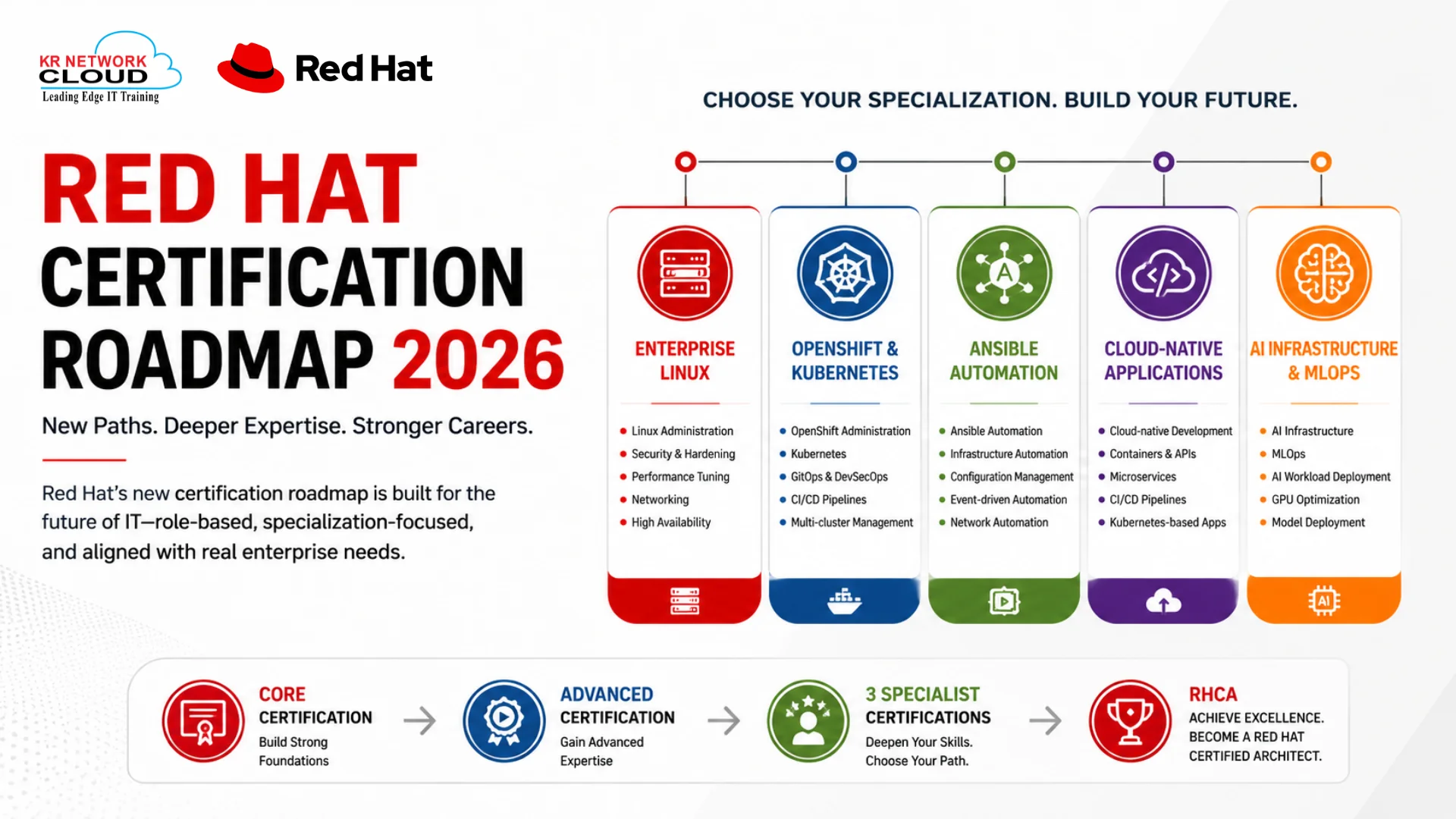
Professionals who want to understand the full Red Hat certification roadmap 2026 across Enterprise Linux, OpenShift, AI, and Ansible can also explore this detailed breakdown of the updated certification structure.
Red Hat now follows a pathway-based system where every certification belongs to a specific technology domain. This makes the roadmap cleaner, easier to follow, and more aligned with real enterprise job roles.
This guide explains the complete RHCA in OpenShift pathway in simple terms.
Red Hat’s 2026 Certification Domains
The new certification ecosystem is divided into five focused technology tracks:
- Enterprise Linux
- OpenShift
- Ansible Automation
- Cloud-native Applications
- AI
This change is important because certifications are no longer treated as isolated achievements.
Instead, professionals now develop expertise within one specialization.
For example, candidates can now pursue:
- Red Hat Certified Architect in OpenShift
- Red Hat Certified Architect in Enterprise Linux
- Red Hat Certified Architect in Ansible Automation
- Red Hat Certified Architect in Cloud-native Applications
- Red Hat Certified Architect in AI
The revised structure makes it easier for employers to identify technology-specific expertise.
For professionals, it provides a more logical long-term learning path.
The New 5-Level OpenShift Certification Journey
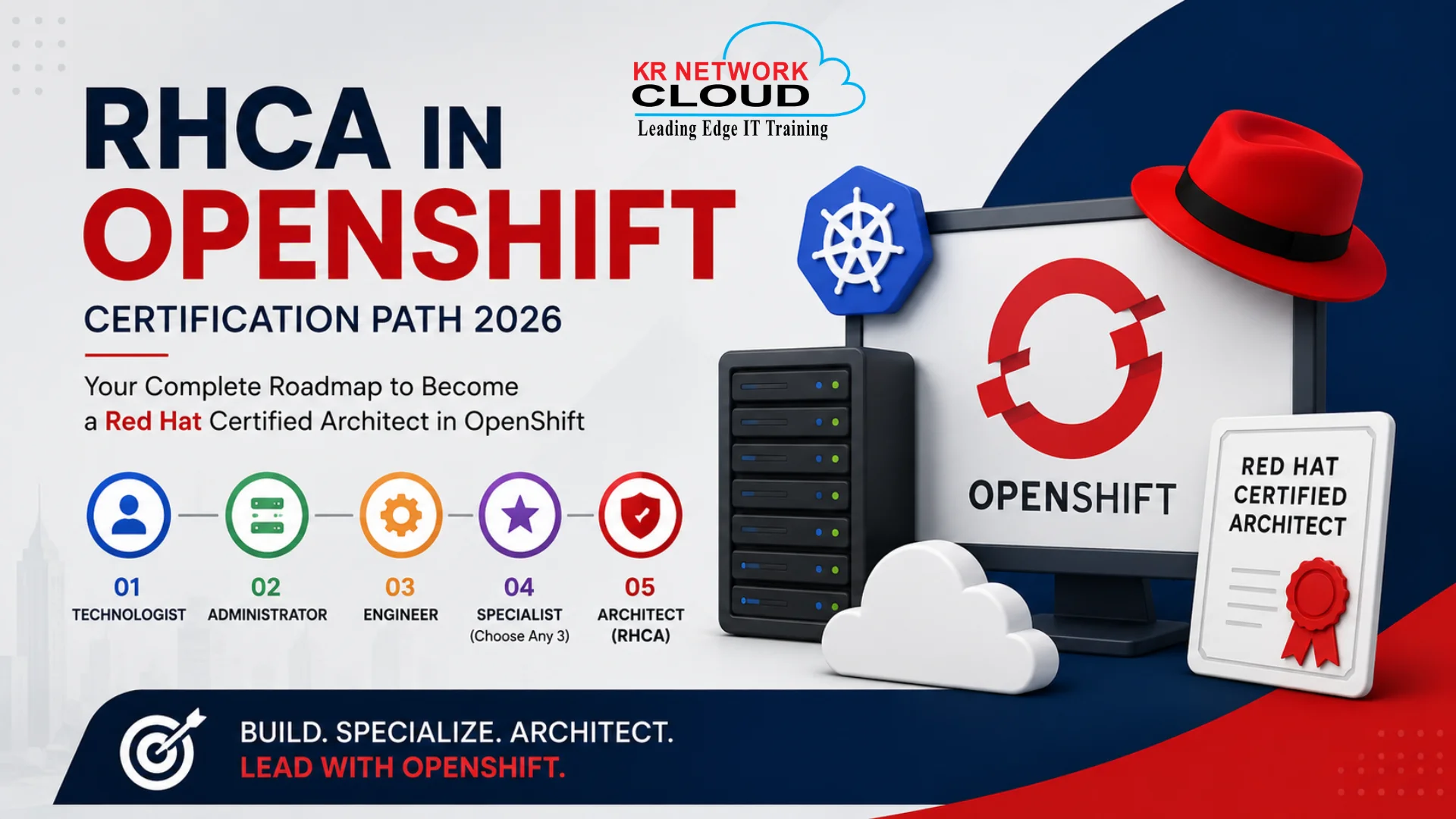
Red Hat certifications are now grouped into five progressive levels.
Each stage builds toward advanced enterprise-level OpenShift expertise.
Level 1: Technologist Certifications
This is the starting point in the OpenShift pathway.
At this stage, Red Hat currently offers:
- EX180 – Red Hat Certified Technologist in OpenShift
- EX156 – Red Hat Certified Technologist in OpenShift Virtualization
These certifications are intended for candidates entering the container and Kubernetes ecosystem.
The focus areas generally include:
- Container fundamentals
- Kubernetes basics
- OpenShift concepts
- Pod deployment
- Application lifecycle basics
- OpenShift Virtualization introduction
- Core cloud-native concepts
This level is ideal for beginners who want to build a foundation in container platform technologies.
Candidates learning container technologies can also improve their practical skills through OpenShift containers with Podman training before moving toward advanced OpenShift administration.
Level 2: OpenShift Administrator
The next stage focuses on administration skills.
To complete this level, candidates need:
- EX280 – Red Hat Certified OpenShift Administrator
This certification validates practical administration capabilities in enterprise OpenShift environments.
Candidates usually learn:
- OpenShift cluster administration
- Project and user management
- Networking setup
- Security and RBAC configuration
- Persistent storage management
- Application deployment workflows
- Monitoring and troubleshooting
- Day-to-day cluster operations
EX280 is highly respected because it focuses heavily on practical administration work.
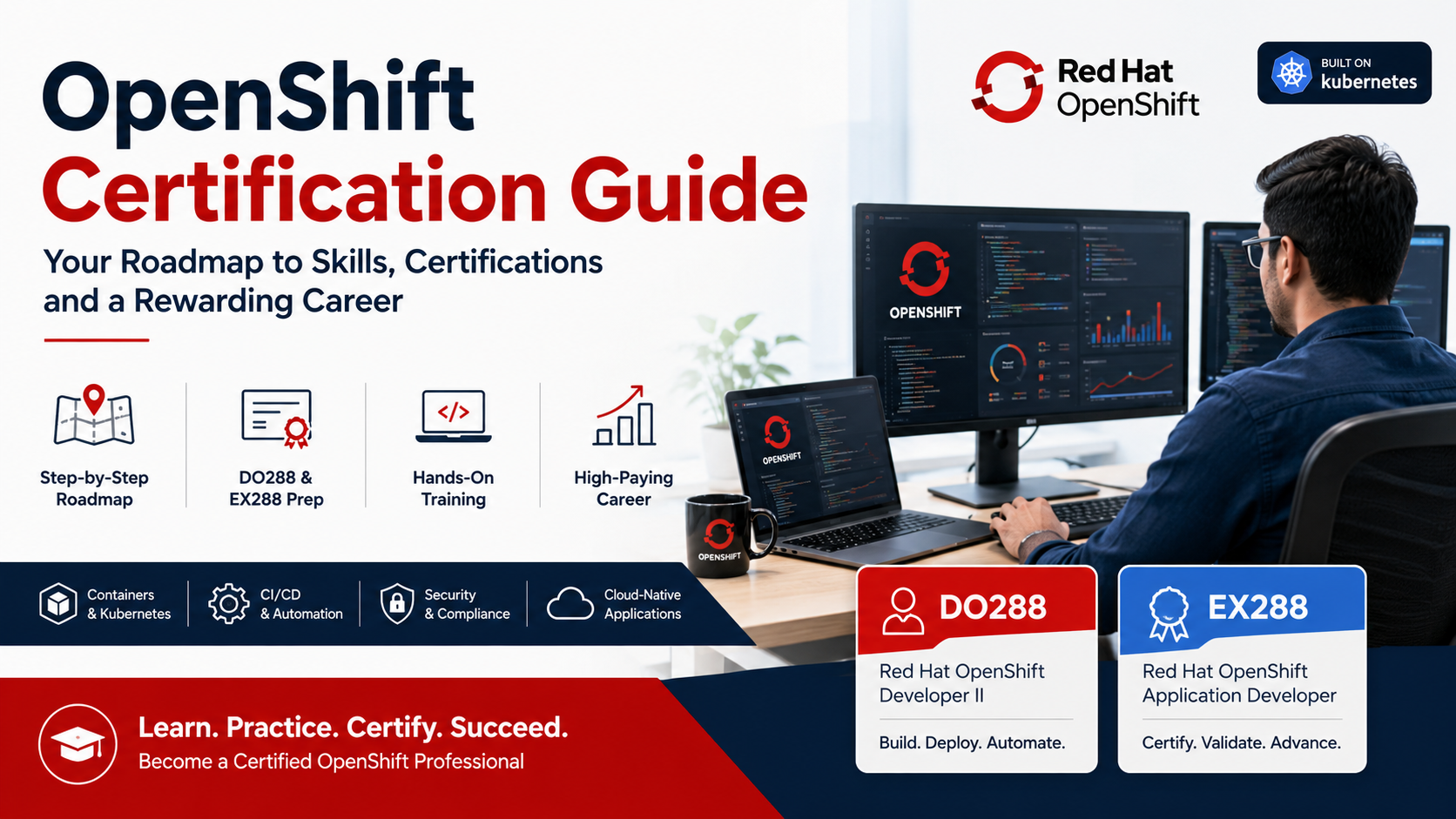
Candidates preparing for EX280 usually benefit from structured Red Hat OpenShift administration training combined with hands-on lab practice.
Professionals pursuing roles like Kubernetes Administrator, Platform Engineer, or OpenShift Administrator often consider this certification an important milestone.
Level 3: Engineer-Level Certification
Once administration fundamentals are covered, the next stage is the Engineer level.
The required certification is:
- EX380 – Red Hat Certified Advanced System Administrator in OpenShift
This level focuses on managing complex OpenShift environments at enterprise scale.
Key learning areas include:
- Advanced OpenShift operations
- Large-scale cluster management
- Advanced networking concepts
- Enterprise troubleshooting
- Storage optimization
- Security implementation
- Cluster performance tuning
- Production infrastructure operations
This certification is valuable for professionals managing enterprise Kubernetes platforms in production environments.
Level 4: Specialist Certifications
The Specialist level introduces role-based expertise.
Candidates moving toward RHCA in OpenShift must complete at least three specialist certifications.
Current specialist certification options include:
- EX316 – Red Hat Certified Specialist in OpenShift Virtualization exam
- EX336 – Red Hat Certified Specialist in Automating OpenShift Virtual Machine Management exam
- EX370 – Red Hat Specialist in OpenShift Data Foundation exam
- EX430 – Red Hat Certified Specialist in OpenShift Advanced Cluster Security Exam
- EX432 – Red Hat Certified Specialist in OpenShift Advanced Cluster Management exam
- EX229 – Red Hat Certified Specialist in ROSA exam
This part of the roadmap provides flexibility based on career direction.
For example:
Professionals working in security can focus on advanced cluster protection.
Engineers managing hybrid cloud environments may choose multicluster and virtualization certifications.
Professionals interested in virtualization technologies can strengthen their practical implementation skills through Red Hat OpenShift virtualization training.
Candidates working with enterprise storage can focus on OpenShift Data Foundation.
Engineers planning to work with service mesh and microservices networking can also explore Istio OpenShift Service Mesh training for advanced traffic management and security concepts.
The new pathway is much more practical because professionals can specialize according to actual job responsibilities.
Level 5: RHCA in OpenShift
The final stage is the Architect level.
After completing the required certifications, candidates achieve:
Red Hat Certified Architect in OpenShift
Current RHCA in OpenShift requirements include:
- EX280
- EX380
- Minimum three OpenShift specialist certifications
This updated structure feels more organized than the older certification model.
Previously, many professionals viewed RHCA as simply earning multiple disconnected certifications.
Now the pathway is technology-focused and easier to understand.’
Old Certification Structure vs New OpenShift Roadmap
The older Red Hat journey often looked like this:
RHCSA → RHCE → Random specialist certifications → RHCA
The newer OpenShift-focused roadmap follows a cleaner structure:
Administrator Certification → Engineer Certification → Specialist Certifications → RHCA in OpenShift
This updated approach supports better long-term career planning.
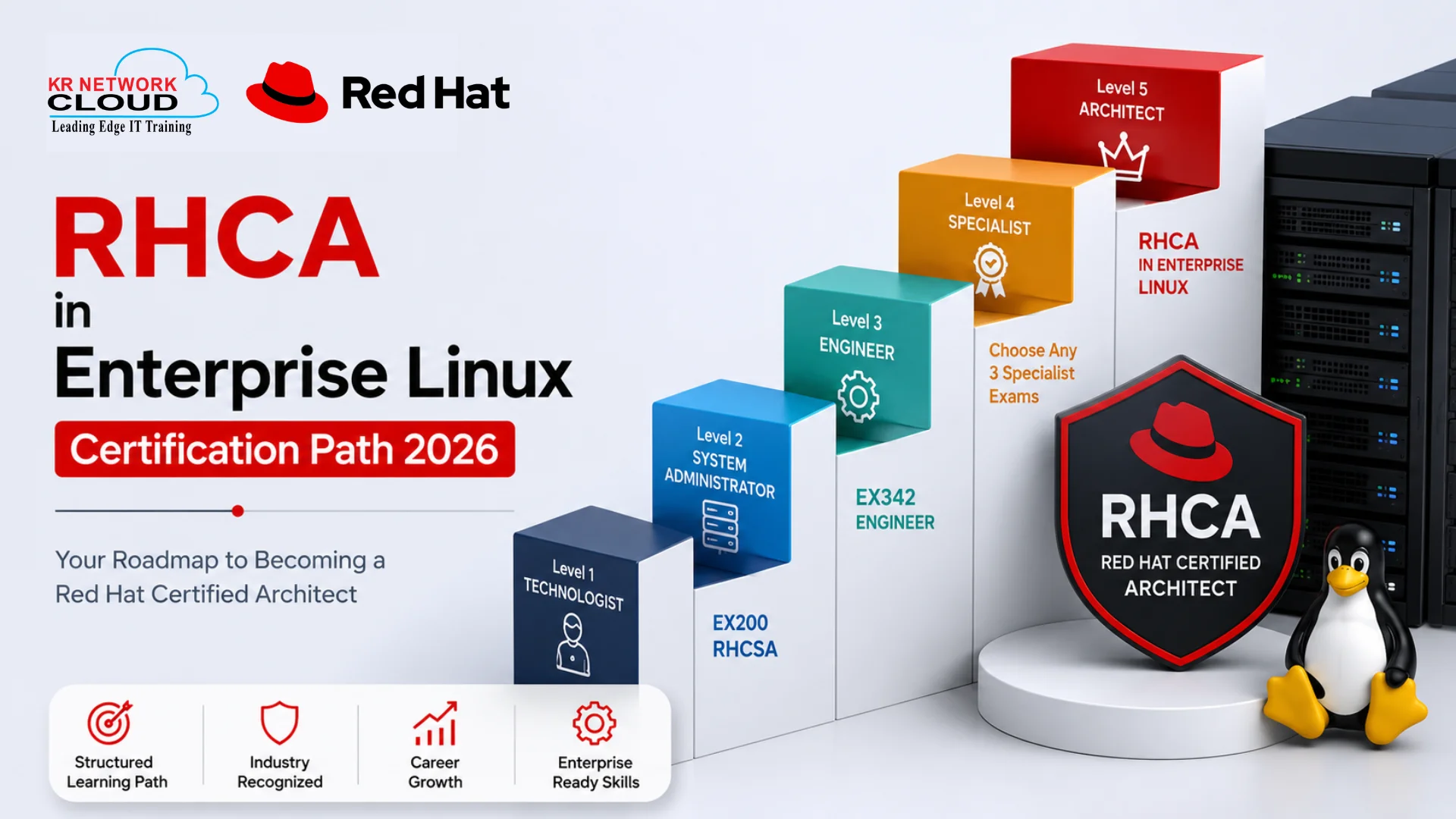
Candidates focusing more on Linux infrastructure instead of Kubernetes platforms may prefer the RHCA in Enterprise Linux certification path pathway, which follows a similar architect-focused structure.
Why the New OpenShift RHCA Path Matters
The 2026 certification update is more aligned with modern enterprise infrastructure requirements.
Today, organizations are heavily investing in:
- Kubernetes platforms
- Hybrid cloud environments
- Container orchestration
- Platform engineering
- Cloud-native infrastructure
- Cluster security
- Multi-cloud operations
The new RHCA in OpenShift pathway directly reflects these enterprise demands.
Instead of becoming a generalist without depth, professionals can now build focused expertise around OpenShift technologies.
Organizations working with enterprise AI workloads on containers are also increasingly adopting OpenShift AI platforms. Professionals can explore OpenShift AI training to understand AI operations within cloud-native environments.
Why RHCA in OpenShift Has Strong Industry Value
Red Hat certifications have always carried strong reputation because of their practical exam structure.
Candidates perform real administration and troubleshooting tasks during the exams.
Unlike purely theoretical certifications, Red Hat exams validate hands-on operational skills.
That is one of the biggest reasons enterprise organizations value RHCA-certified professionals.
The certification demonstrates the ability to manage real OpenShift infrastructure environments.
Is RHCA in OpenShift Suitable for Beginners?
Yes, but it should be treated as a long-term learning target.
A practical roadmap for beginners usually looks like this:
- Step 1: Learn Linux fundamentals
- Step 2: Understand containers and Kubernetes basics
- Step 3: Prepare for EX180 or EX156
- Step 4: Move to EX280 administration-level preparation
- Step 5: Gain practical OpenShift experience
- Step 6: Prepare for EX380
- Step 7: Choose specialist certifications based on career goals
- Step 8: Complete RHCA in OpenShift
This gradual approach is more realistic for most professionals.
Beginners who are still confused about the difference between OpenShift vs Kubernetes should first understand how both platforms work before starting the RHCA journey.