Red Hat’s New Certification Roadmap Update: What Should You Learn in 2026?
- KR NETWORK CLOUD
- May 16, 2026
The IT industry is changing very fast, and because of that, the entire Red Hat certification roadmap 2026 has also changed in a big way. Earlier, students mainly focused on learning only Linux, completing RHCSA, then RHCE, and later moving toward higher certifications. But now the market is moving toward Automation, OpenShift, Kubernetes, DevOps, hybrid cloud, and even AI infrastructure.
This new Red Hat certification update is not a small change. Red Hat has redesigned its complete learning and specialization model to match modern enterprise job roles. Many old YouTube roadmaps and outdated tutorials may now confuse students because the industry requirements are no longer the same.
If you are planning to build a career in Linux, cloud, DevOps, or infrastructure management, then understanding this new Red Hat roadmap becomes very important.
Why Red Hat Changed Its Certification Structure
Earlier, the learning path was simple:
RHCSA → RHCE → More Certifications → RHCA
But the problem was that students often selected certifications from completely different domains without building strong expertise in one specific area.
For example:
- Someone learned Linux administration
- Then moved into networking
- Then containers
- Then security
- Then cloud tools
This created confusion because companies could not clearly identify a candidate’s real specialization.
That is why the new Red Hat certification structure is now more role-based and specialization-focused.
How the Old Red Hat Certification Roadmap Worked
Before the new Red Hat certification roadmap 2026, students usually needed:
- RHCSA
- RHCE
- 5 additional certifications
This meant becoming an RHCA required around 7 certifications in total.
The old system was flexible, but it also had some problems:
- No proper specialization
- Too many mixed certification choices
- Unclear career direction
- Focus on exam collection instead of practical expertise
Many learners became “generalists” instead of becoming specialists in one technology area.
What Changed in the Red Hat Certification Roadmap 2026
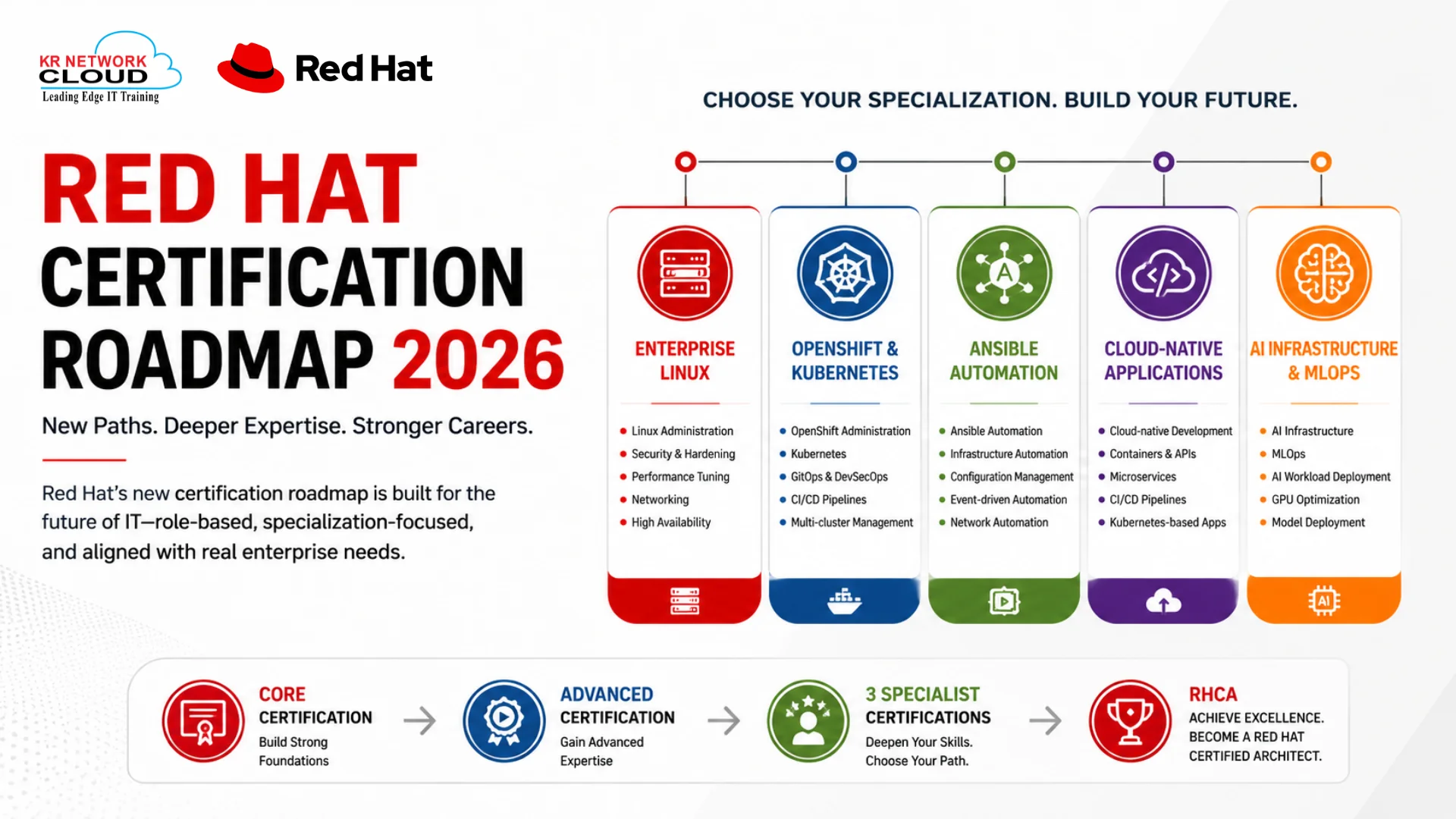
The new Red Hat career roadmap is now divided into clear specialization tracks.
Instead of one generic learning path, students now choose a proper domain from the beginning.
Red Hat has introduced these major paths:
- Red Hat Certified Architect in Enterprise Linux
- Red Hat Certified Architect in OpenShift
- Red Hat Certified Architect in Ansible Automation
- Red Hat Certified Architect in Cloud-native applications
- Red Hat Certified Architect in AI
This new certification roadmap is designed according to real enterprise hiring trends.
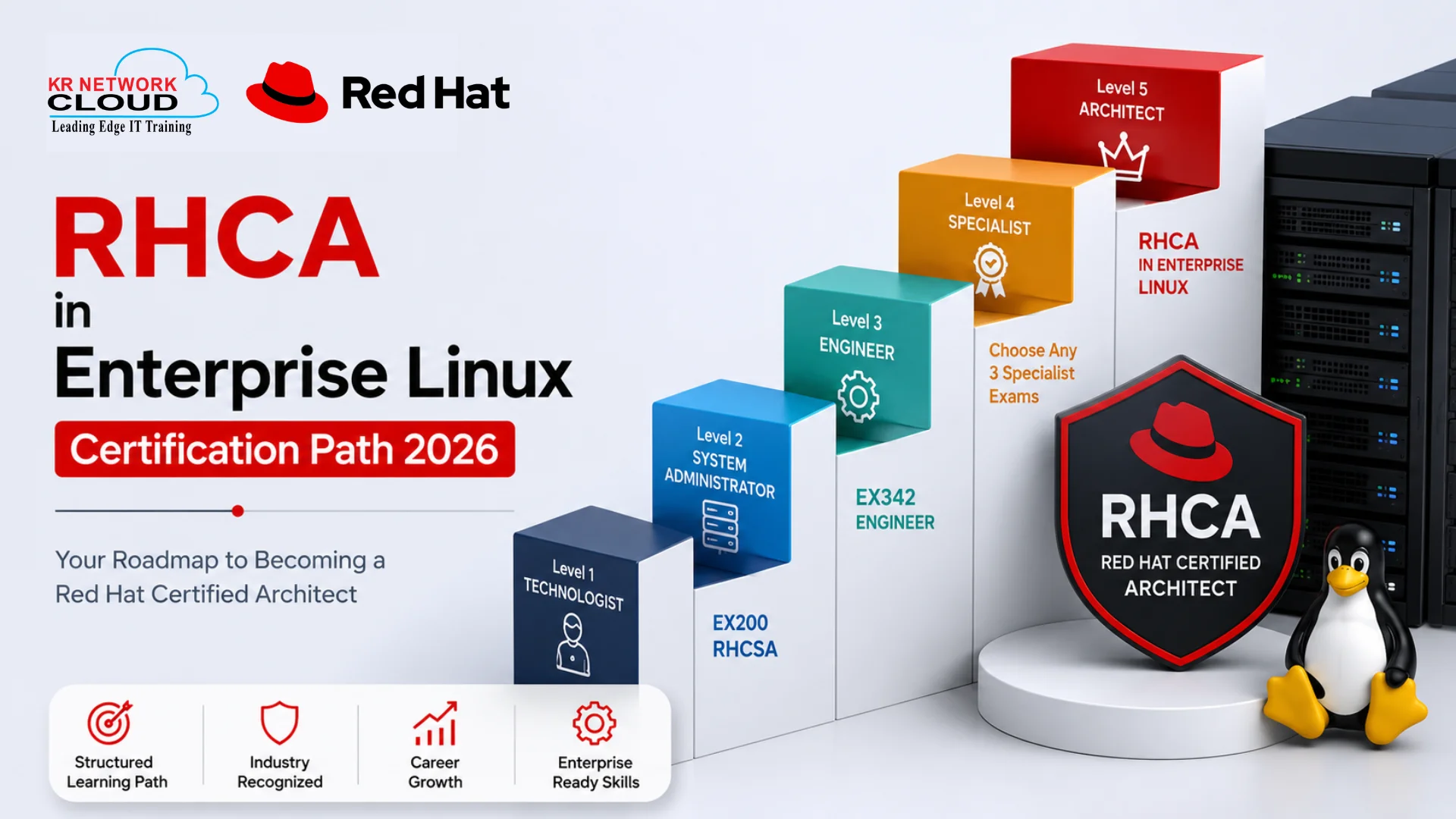
1. Red Hat Certified Architect in Enterprise Linux Path
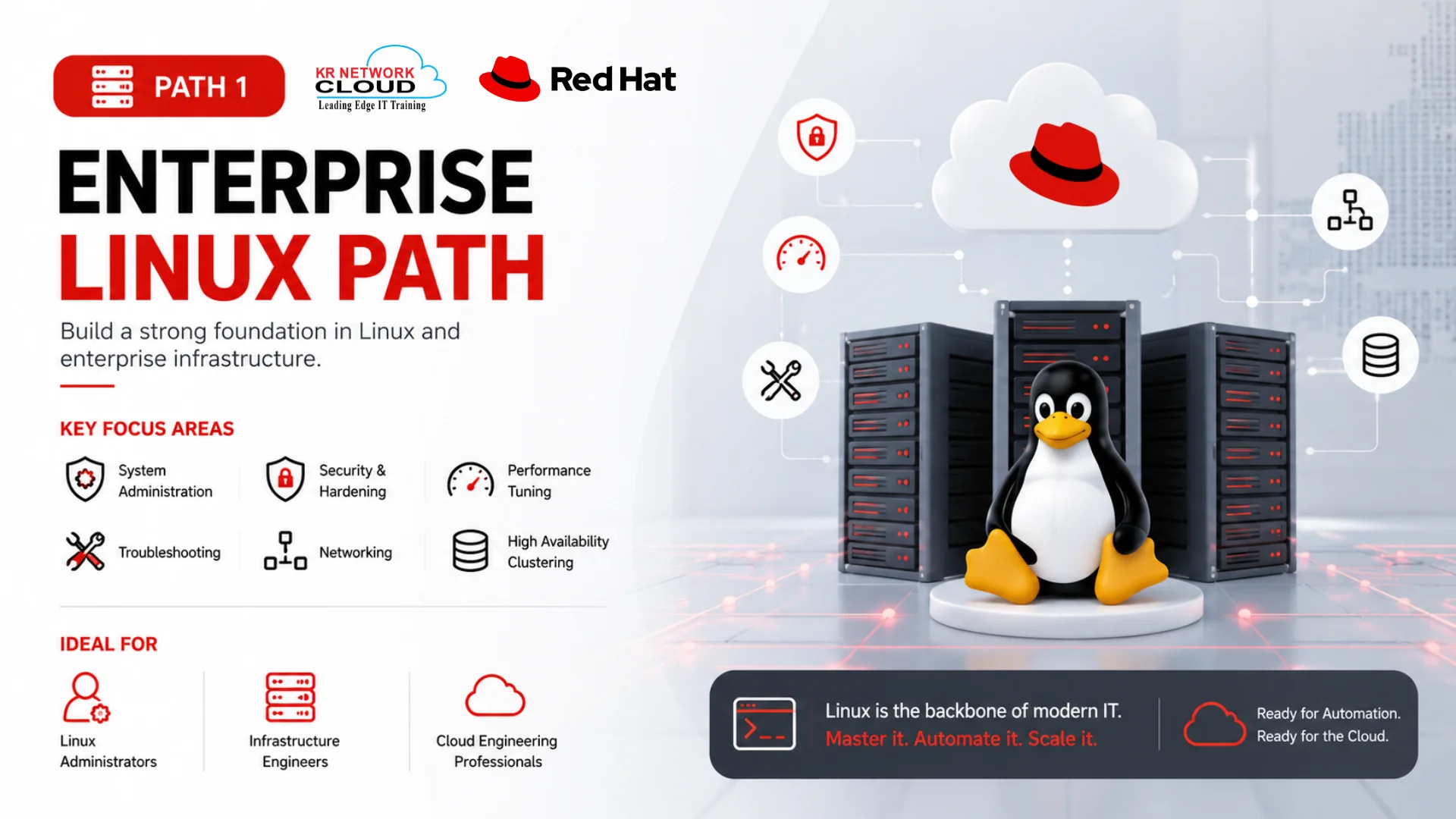
This path is mainly for students who want strong careers in Enterprise Linux and infrastructure administration.
You need to follow the below path
Two certification that are required:
- EX200: Red Hat Certified System Administrator (RHCSA)
- EX342: Red Hat Certified Advanced System Administrator in Enterprise Linux exam
Apart from two above mentioned exams, any three exams need to be clear to become Red Hat Certified Architect (RHCA) in Enterprise Linux:
- EX210: Red Hat Certified Specialist in Cloud Infrastructure exam
- EX260: Red Hat Certified Specialist in Ceph Cloud Storage exam
- EX358: Red Hat Certified Specialist in Services Management and Automation exam
- EX362: Red Hat Certified Specialist in Identity Management exam
- EX403: Red Hat Certified Specialist in Deployment and Systems Management exam
- EX415: Red Hat Certified Specialist in Security: Linux exam
- EX436: Red Hat Certified Specialist in High Availability Clustering exam
- EX442: Red Hat Certified Specialist in Performance Tuning exam
This path is useful for:
- Linux administrators
- Infrastructure engineers
- Cloud engineering professionals
Even in 2026, Linux remains the foundation of enterprise infrastructure. But now companies also expect Linux professionals to understand Infrastructure automation and modern cloud environments.
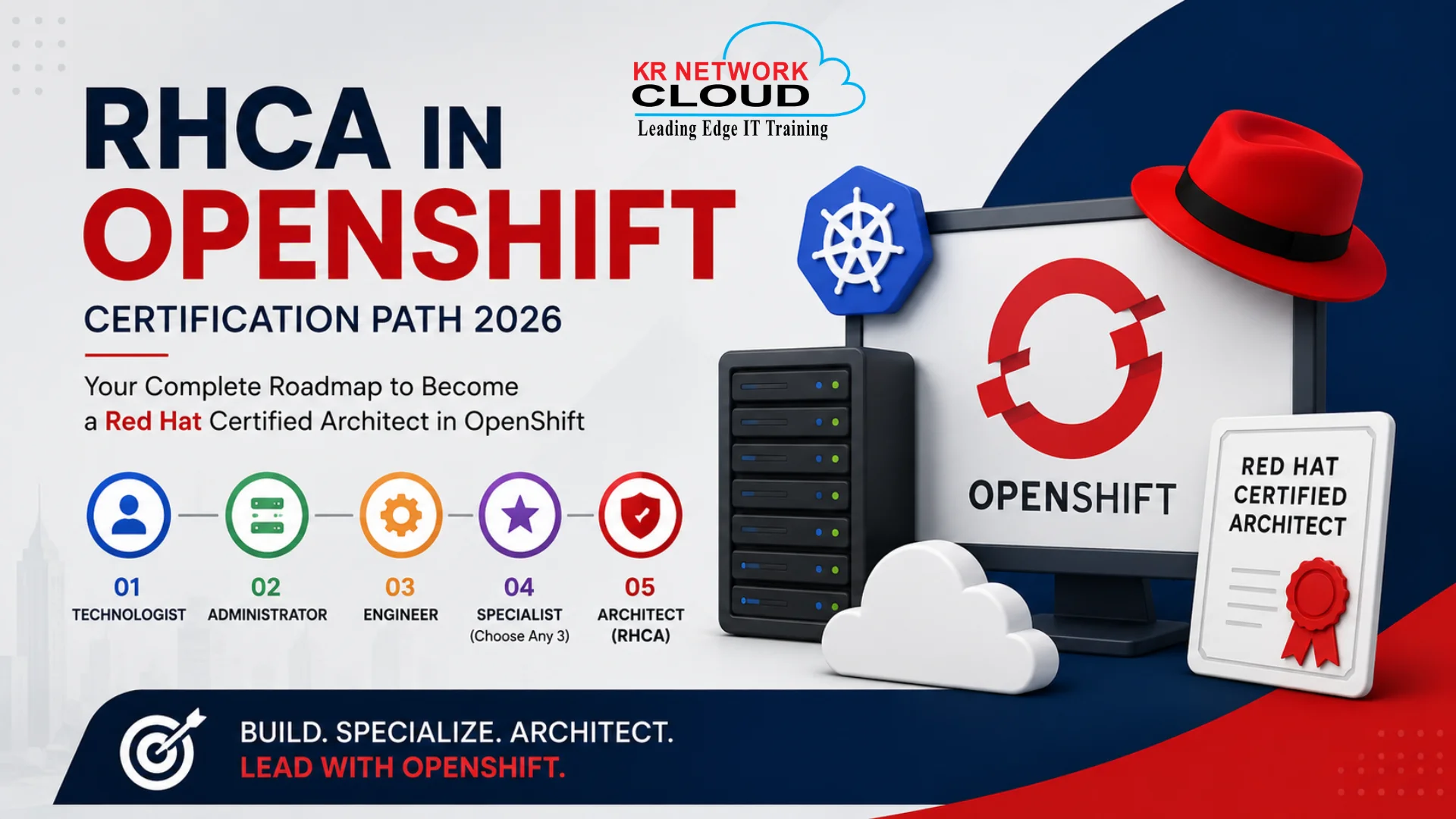
2. Red Hat Certified Architect in OpenShift Path
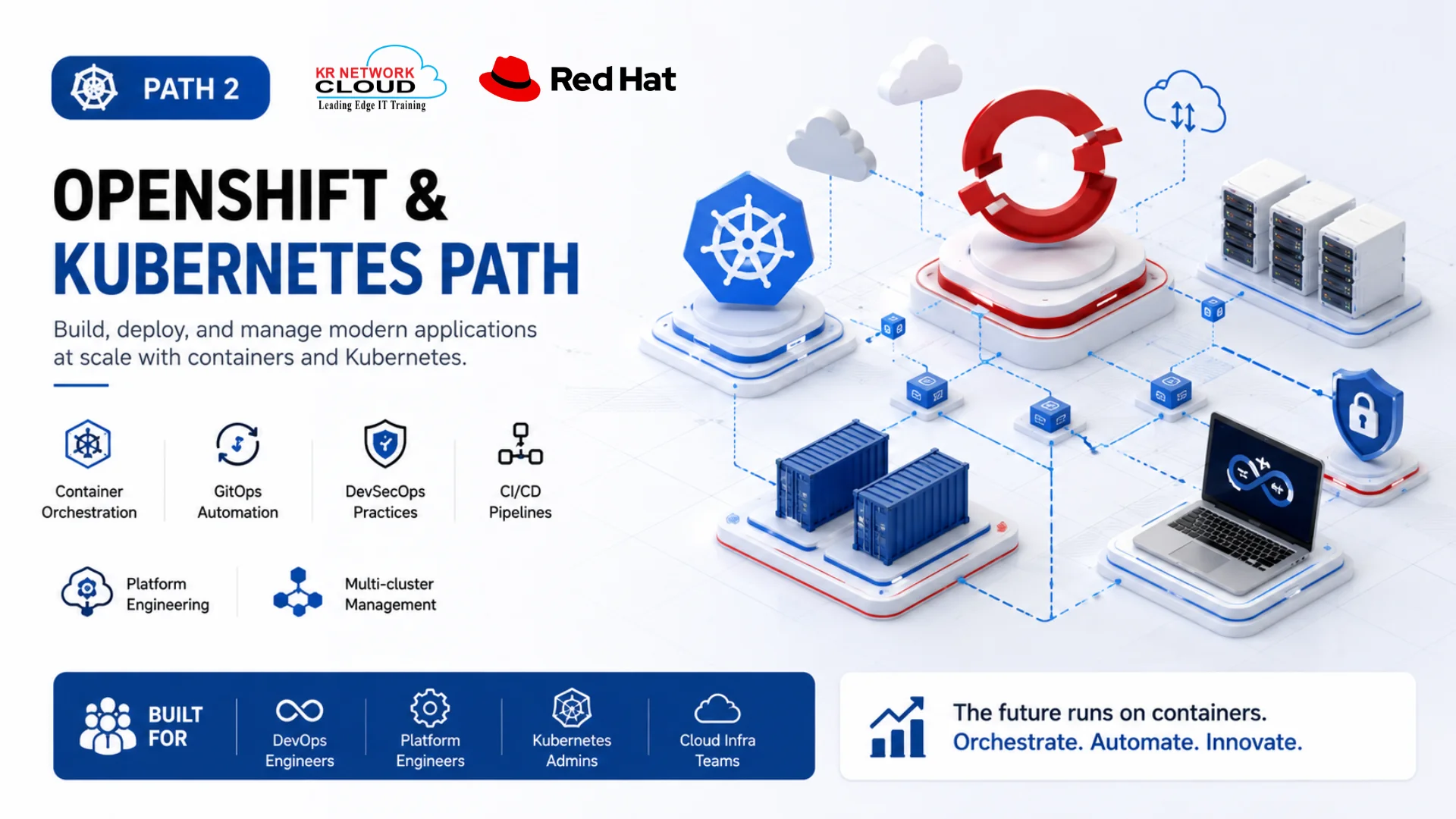
This is currently one of the fastest-growing parts of the new Red Hat roadmap.
Modern companies are rapidly moving toward containers and Kubernetes administration, which is why OpenShift skills are becoming highly valuable.
You need to follow the below path
Two certification that are required
- EX280: Red Hat Certified OpenShift Administrator exam
- EX380: Red Hat Certified Advanced System Administrator in OpenShift exam
Apart from two above mentioned exams, any three exams need to be clear to become Red Hat Certified Architect (RHCA) in OpenShift:
- EX316: Red Hat Certified Specialist in OpenShift Virtualization exam
- EX336: Red Hat Certified Specialist in Automating OpenShift Virtual Machine Management exam
- EX370: Red Hat Certified Specialist in OpenShift Data Foundation exam
- EX430: Red Hat Certified Specialist in OpenShift Advanced Cluster Security exam
- EX432: Red Hat Certified Specialist in OpenShift Advanced Cluster Management exam
- EX229: Red Hat Certified Specialist in ROSA exam
This path is useful for:
- DevOps engineers
- Platform engineering roles
- Kubernetes administrators
- Cloud infrastructure teams
If someone wants to enter modern DevOps environments, then learning OpenShift and Kubernetes can be a smart long-term decision.
3. Red Hat Certified Architect in Ansible Path
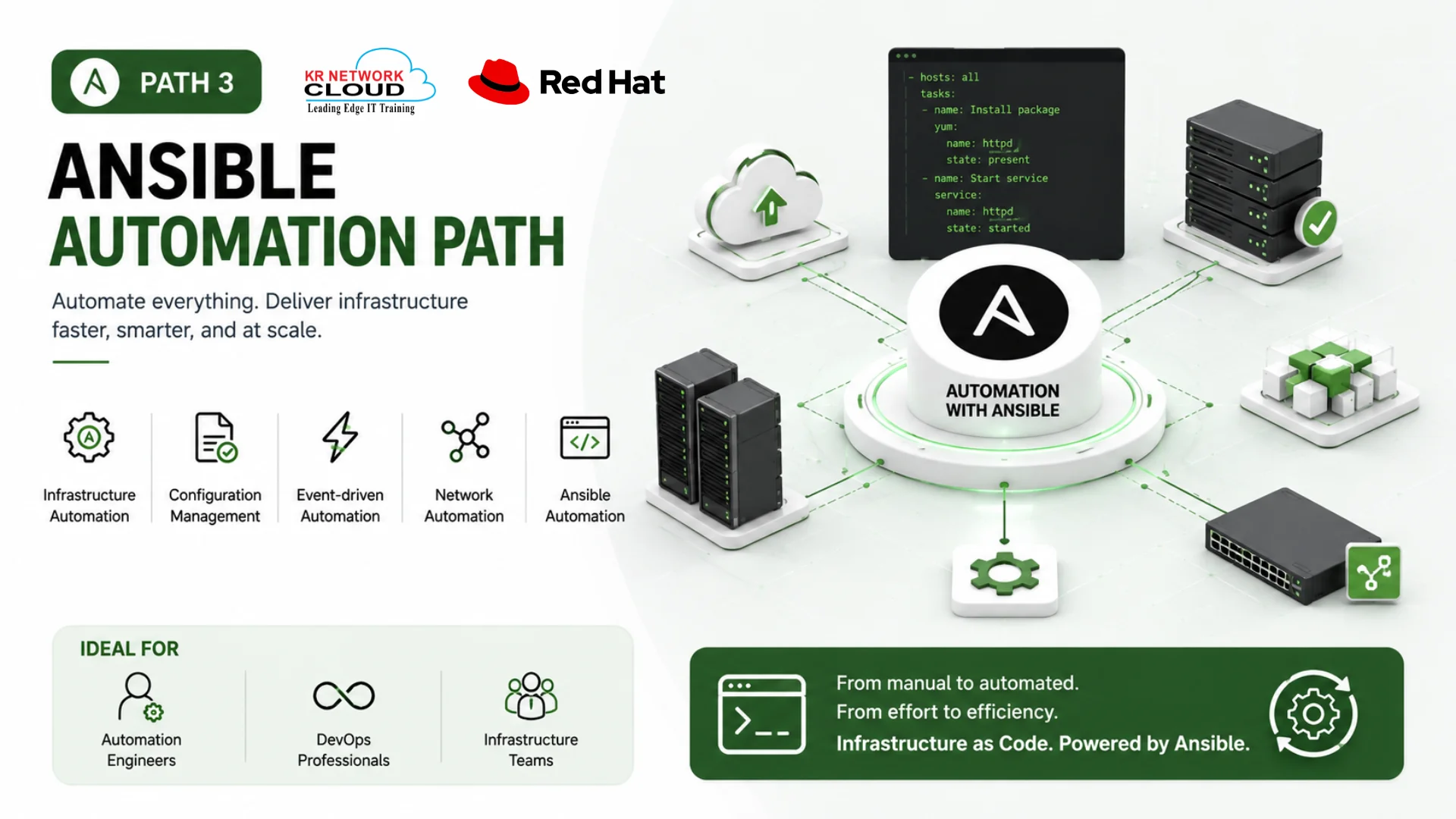
One major focus area in the new Red Hat certification update is Automation.
Today companies do not want engineers manually managing everything. They want scalable and automated infrastructure.
You need to follow the below path
Two certification that are required:
- EX200: Red Hat Certified System Administrator (RHCSA) exam
- EX294: Red Hat Certified Advanced System Administrator in Ansible exam
Apart from two above mentioned exams, any three exams need to be clear to become Red Hat Certified Architect (RHCA) in Ansible:
- EX374: Red Hat Certified Specialist in Developing Automation with Ansible Automation Platform exam
- EX417: Red Hat Certified Specialist in Microsoft Windows Automation with Ansible exam
- EX457: Red Hat Certified Specialist in Ansible Network Automation exam
- EX467: Red Hat Certified Specialist in Managing Automation with Ansible Automation Platform exam
This path is best for:
- Automation engineer roles
- DevOps professionals
- Infrastructure teams
Even the modern RHCE path now heavily focuses on Automation using Ansible because enterprises are shifting toward Infrastructure-as-Code workflows.
4. Red Hat Certified Architect in Cloud-native Applications Path
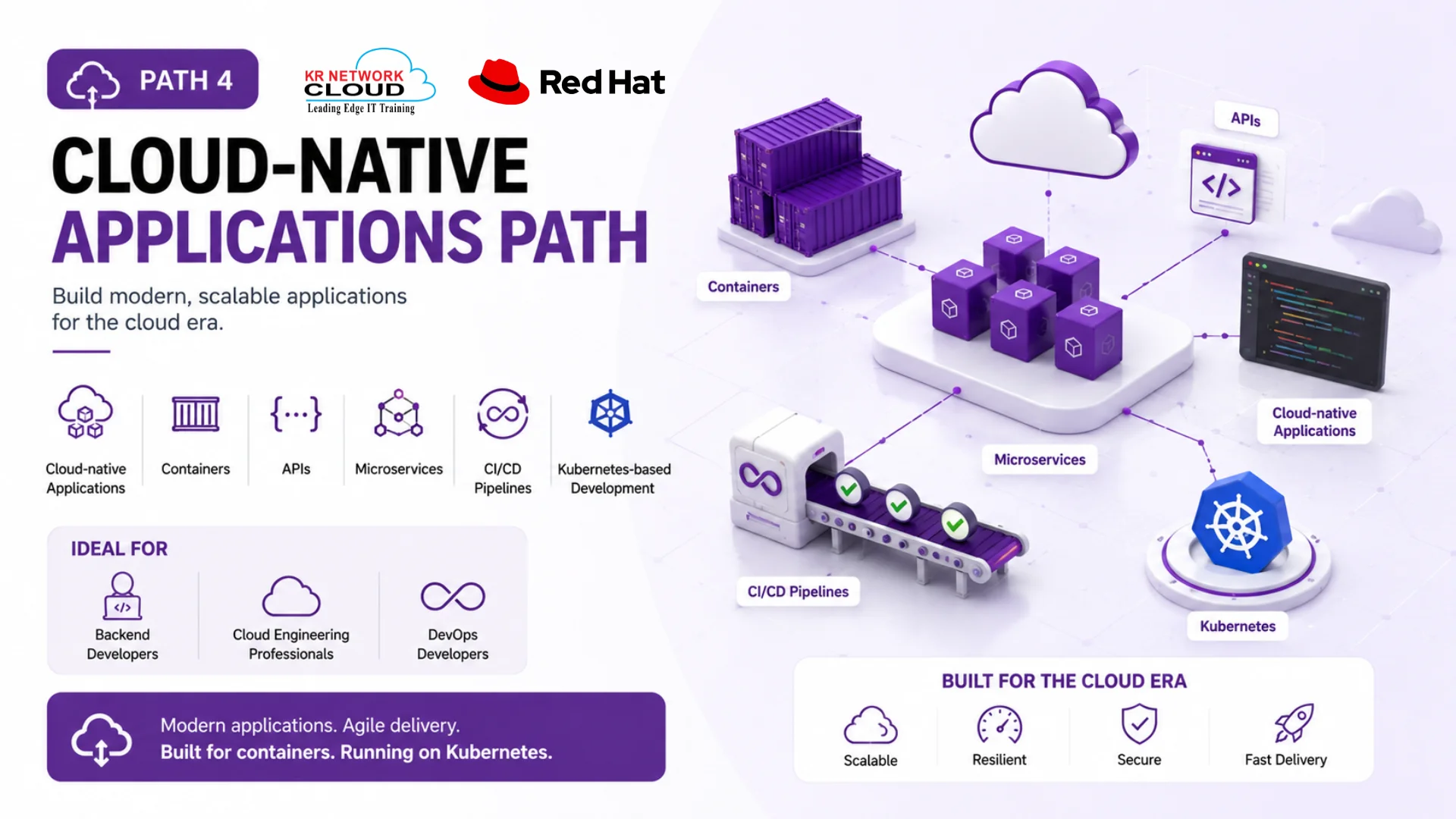
This path is more development-focused.
Two certification that are required
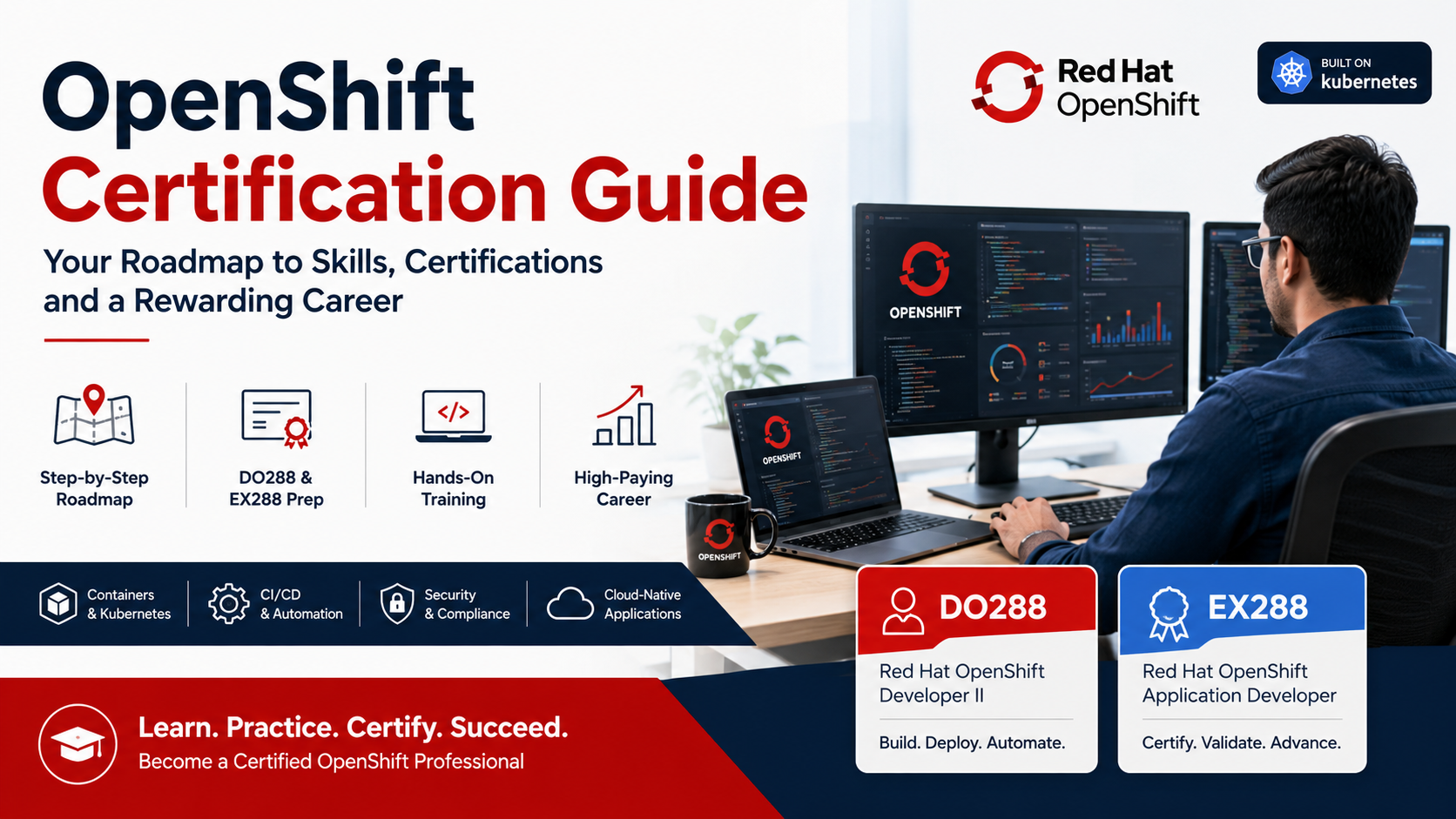
- EX188: Red Hat Certified Developer in Cloud-native Applications exam
- EX288: Red Hat Certified Advanced Developer in Cloud-native Applications exam
Apart from two above mentioned exams, any three exams need to be clear to become Red Hat Certified Architect (RHCA) in Cloud-Native Applications:
- EX183: Red Hat Certified Specialist in Enterprise Application Development exam
- EX221: Red Hat Certified Specialist in Cloud-native Integration exam
- EX240: Red Hat Certified Specialist in API Management exam
- EX248: Red Hat Certified Specialist in Enterprise Application Server Administration exam
- EX328: Red Hat Certified Specialist in Building Resilient Microservices exam
- EX378: Red Hat Certified Specialist in Cloud-native Development exam
- EX482: Red Hat Certified Specialist in Event-Driven Application Development exam
This path fits:
- Backend developers
- Cloud engineering professionals
- DevOps developers
As companies continue adopting Hybrid cloud environments, cloud-native skills are becoming more important than traditional application deployment methods.
5. Red Hat Certified Architect in AI Infrastructure Path
Although, there are many updates yet to be announce in this path, yet it is One of the biggest highlights of the new Red Hat certification roadmap 2026 is the introduction of AI-focused learning paths.
This clearly shows where the future industry is moving.
This path is useful for:
- AI infrastructure engineers
- MLOps engineers
- Platform engineering teams
This does not mean every Linux student should suddenly become an AI expert. But it clearly shows that enterprise IT teams are now expected to support AI workloads alongside traditional infrastructure.
The New Certification Structure Is Simpler
Another important change in the new Red Hat certification structure is the simplified progression model.
Now the structure follows this path:
Core Certification → Advanced Certification → 3 Specialist Certifications → RHCA
This new certification roadmap gives:
- Better clarity
- Better specialization
- Better career planning
- More practical skill development
Instead of randomly collecting certifications from different domains, students now complete certifications inside one specialization track.
RHCE and RHCA Are No Longer Generic
This is one of the most important changes students should understand.
Earlier:
- RHCE was generic
- RHCA was generic
Now:
- RHCE becomes specialization-based
- RHCA also becomes specialization-based
Examples:
- RHCE in OpenShift
- RHCE in Automation
- RHCA in Enterprise Linux
This helps employers understand exactly what type of expertise a candidate has.
Why Old YouTube Roadmaps May Not Work Now
Many old tutorials still suggest:
“Learn Linux → Complete RHCSA → Complete RHCE → get job.”
But enterprise IT has changed heavily.
Today companies expect professionals to understand:
- Automation
- Kubernetes
- OpenShift
- DevOps workflows
- Hybrid cloud
- Container technologies
- CI/CD pipelines
This does not mean Linux is outdated.
Linux is still extremely important.
But Linux alone is no longer enough for many modern infrastructure roles.
That is why blindly following old learning videos may waste time if students do not understand the updated Red Hat career roadmap properly.
Watch our technology awareness podcasts for a better and right guidance.
What Should Students Learn in 2026?
There is no single perfect answer because every student has different interests.
But students should now choose skills according to career roles instead of randomly collecting certifications.
If You Like Linux and Infrastructure
Focus on:
- Enterprise Linux
- RHCSA
- RHCE
- Automation
- Infrastructure automation
If You Like DevOps and Cloud
Focus on:
- OpenShift
- Kubernetes
- DevOps
- CI/CD pipelines
- Platform engineering
If You Like Development
Focus on:
- Cloud-native applications
- APIs
- Containers
- Hybrid cloud
If You Want Future-Oriented Skills
You can slowly explore:
- AI infrastructure
- MLOps
- OpenShift AI
- Automation
- Cloud engineering
Seeking for professional guidance? Contact us at +91-9555378418 or
Visit our contact page & fill the form
Final Thoughts
The new Red Hat certification roadmap 2026 is mainly about specialization and career direction.
Earlier, students used to collect certifications without a clear path. But now the new Red Hat certification structure focuses more on practical job roles and industry-specific expertise.
The biggest lesson from this entire Red Hat certification update is simple:
Do not start learning randomly.
First understand your target role.
Then build your skills around that direction.
Because in today’s enterprise market, focused skills in Linux, Automation, Kubernetes, OpenShift, DevOps, and AI infrastructure matter much more than simply collecting certificates.