Why Learning OpenShift (DO280) Is Mandatory in 2026!
- KR NETWORK CLOUD
- February 26, 2026
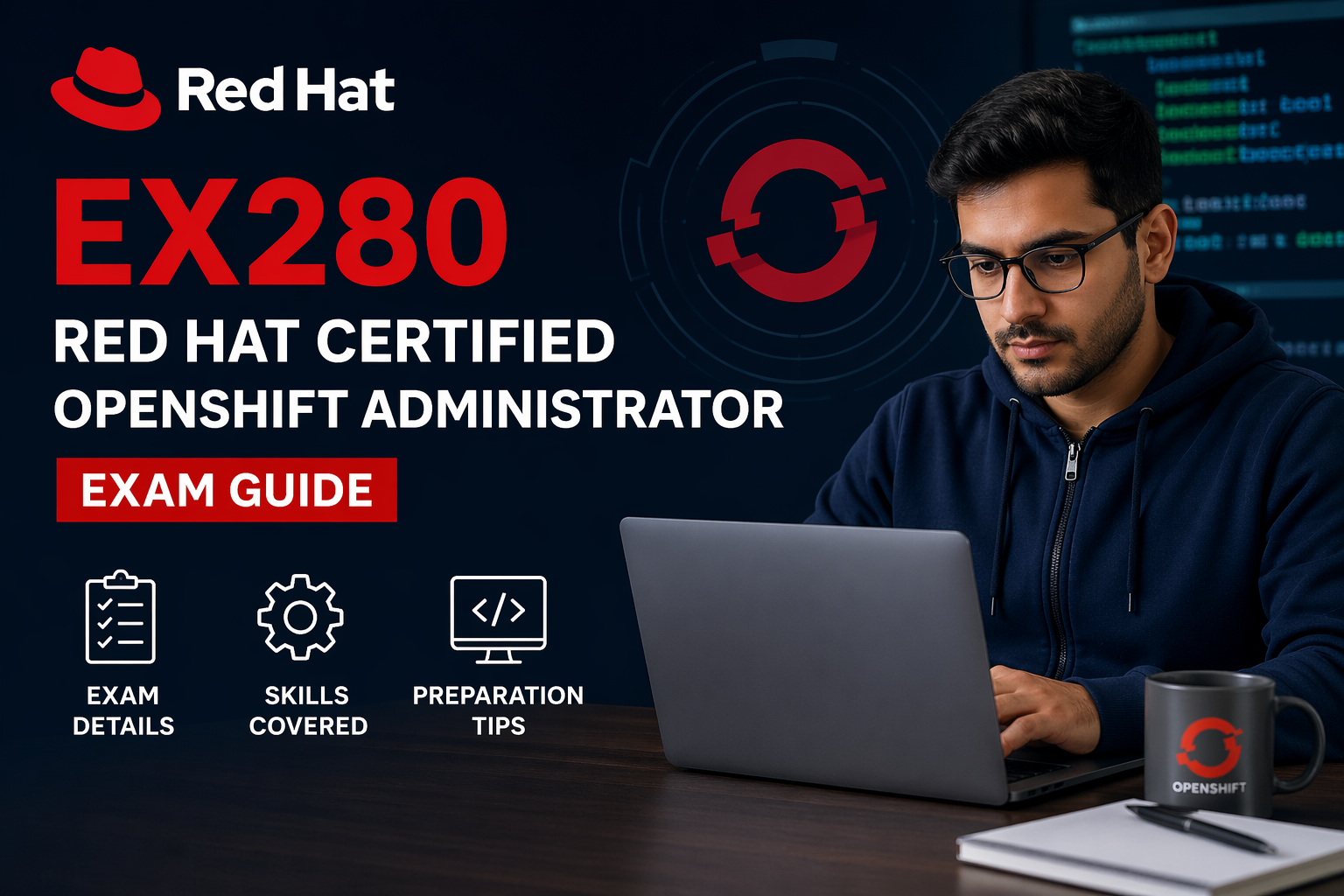
Red Hat OpenShift Administration II (DO280)
Introduction – The Move to Kubernetes-Based Systems
In 2026, most companies run their applications in containers.
Virtual machines are still used, but containers and Kubernetes are now the main choice.
From banks to hospitals, from telecom companies to AI startups, everyone needs a secure and stable container platform.
Red Hat created Red Hat OpenShift to make Kubernetes easier and safer for big companies. It adds security, user control, monitoring, updates, and many enterprise tools.
Learning Red Hat OpenShift Administration II (DO280) is not optional in 2026. It matches real production work in companies.
2026 Market Demand for OpenShift Administrators
Today, companies do not just say “We use Kubernetes.”
They say “We use OpenShift.”
OpenShift is widely used in:
- Banking companies
- Telecom companies
- Healthcare systems
- Government projects
- Manufacturing and retail companies
In countries like India, Germany, the US, and Middle East nations, many companies use OpenShift for hybrid cloud setups because of security and data rules.
Common Job Roles in 2026:
- OpenShift Administrator
- Platform Engineer
- Site Reliability Engineer (SRE)
- DevOps Engineer
- Cloud Infrastructure Engineer
Many job posts now ask for DO280-level skills, not just basic Kubernetes knowledge.
Why DO280 Is More Practical and Industry-Focused
DO280 is not a beginner course.
It teaches how to manage real production clusters.
You learn how to:
- Manage multi-node OpenShift clusters
- Set up networking and ingress
- Configure user access (RBAC)
- Manage storage and volumes
- Monitor cluster health
- Fix real deployment problems
- Handle cluster upgrades
There is a big difference between:
- Someone who watched YouTube tutorials
- Someone who completed DO280 training
During system failure or outage, companies need experts who can fix issues fast.
In 2026, companies hire people who can keep systems running — not just deploy pods.
Basic Requirements for DO280
Before starting DO280, you should know:
- Basic Linux commands
- Container basics (Docker or Podman)
- Kubernetes fundamentals
- Knowledge similar to OpenShift Administration I (DO180)
If you already work with YAML and kubectl, DO280 will take you deeper into real operations.
OpenShift vs Basic Kubernetes
Kubernetes gives you basic understanding.
OpenShift gives you enterprise-level responsibility.
Kubernetes includes:
- Pods
- Services
- Deployments
- ReplicaSets
OpenShift includes:
- Cluster Operators
- Security Context Constraints (SCC)
- Built-in registry
- OAuth login system
- Image streams
- Built-in CI/CD tools
Most big companies do not install plain Kubernetes manually.
They use supported platforms like OpenShift.
OpenShift admins handle:
- Security
- Patching
- Upgrades
- Compliance
- System monitoring
That is why DO280 is important.
Salary and Career Growth in 2026
OpenShift admins earn more than general system admins because they manage critical systems.
Approximate salary range in 2026:
- India: ₹12 to 28 LPA
- Europe: €65,000 to €95,000 per year
- United States: $110,000 to $150,000 per year
Platform engineering jobs are growing fast.
Many DevOps engineers are moving into OpenShift roles.
If you run a tech YouTube channel, creating content about DO280 can help you stand out as a Kubernetes platform expert.
Hybrid Cloud and AI in 2026
Today, companies use hybrid cloud. That means they run apps in:
- On-premise data centers
- Public cloud (AWS, Azure, GCP)
- Edge locations
OpenShift supports hybrid setups.
AI workloads also run in containers now.
OpenShift helps manage:
- Resource usage
- GPU scheduling
- Multi-team access control
- Automation
DO280 prepares you to manage real production clusters, not just test apps.
Real Skills You Learn in DO280
DO280 teaches you how to:
- Upgrade clusters safely
- Manage networking
- Secure applications
- Control user access
- Fix performance issues
- Handle node failures
- Manage storage safely
These are real job responsibilities.
When systems go down, companies lose money.
DO280-trained admins reduce that risk.
Why Beginners Should Not Ignore DO280
Many beginners focus only on:
- Cloud provider certificates
- Basic Kubernetes tutorials
- DevOps tools
This gives only surface knowledge.
DO280 gives deep infrastructure skills.
Even if you are new, learning enterprise container platforms gives long-term career stability.
Cloud tools change fast.
Platform administration remains important because companies depend on it daily.
Who Should Learn DO280 in 2026?
- Linux administrators moving to DevOps
- Kubernetes admins wanting enterprise knowledge
- Cloud engineers working on hybrid cloud
- Platform engineers
- SRE professionals
- IT professionals in companies using OpenShift
Freshers with strong Linux and Kubernetes basics can also learn it.
Certification
After DO280 training, you can take the certification exam:
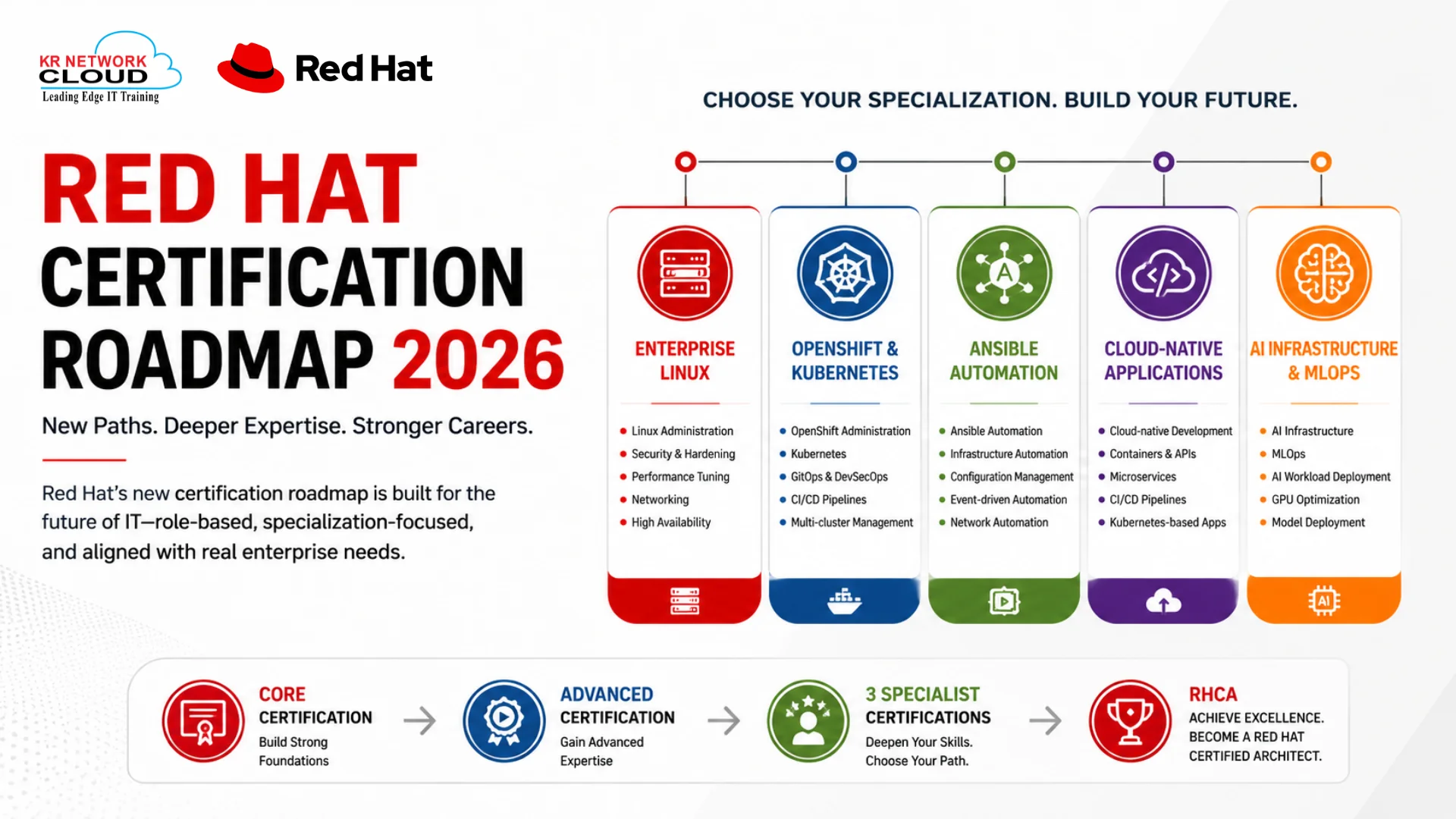
Red Hat Certified OpenShift Administrator
Red Hat exams are performance-based.
You work on real systems during the exam.
There are no multiple-choice questions.
That is why Red Hat certifications are respected.
Why Choose KR Network Cloud for Training
KR Network Cloud offers training based on DO280 topics.
Benefits include:
- Live lab practice
- Real troubleshooting scenarios
- Hybrid cloud setup practice
- Exam guidance
- Industry-based projects
For Indian learners aiming for enterprise DevOps jobs, structured OpenShift training helps move from theory to real work faster.
Conclusion – Why DO280 Is “Mandatory” in 2026
OpenShift is now a common enterprise Kubernetes platform.
Hybrid cloud and AI systems need strong cluster management.
DO280 teaches those real skills.
In 2026, companies do not hire people who only know YAML.
They hire people who can manage and fix production systems.
If you want a career in DevOps, platform engineering, or cloud operations, DO280 matches market demand. And Kr Network Cloud is the best choice for DO280.
FAQs
- Is DO280 difficult?
It is practical and lab-based. If you know Linux and Kubernetes basics, you can learn it. - Is DO280 better than learning Kubernetes alone?
Kubernetes is basic knowledge. DO280 teaches how to manage it in real companies. - Can freshers learn DO280?
Yes, if they have good Linux and container basics. - Is OpenShift used outside India?
Yes. It is used in North America, Europe, and Asia. - Does DO280 help in DevOps jobs?
Yes. Many DevOps and platform roles need OpenShift skills.