Why Linux System admin is a Good Career in 2026!
- KR NETWORK CLOUD
- February 23, 2026
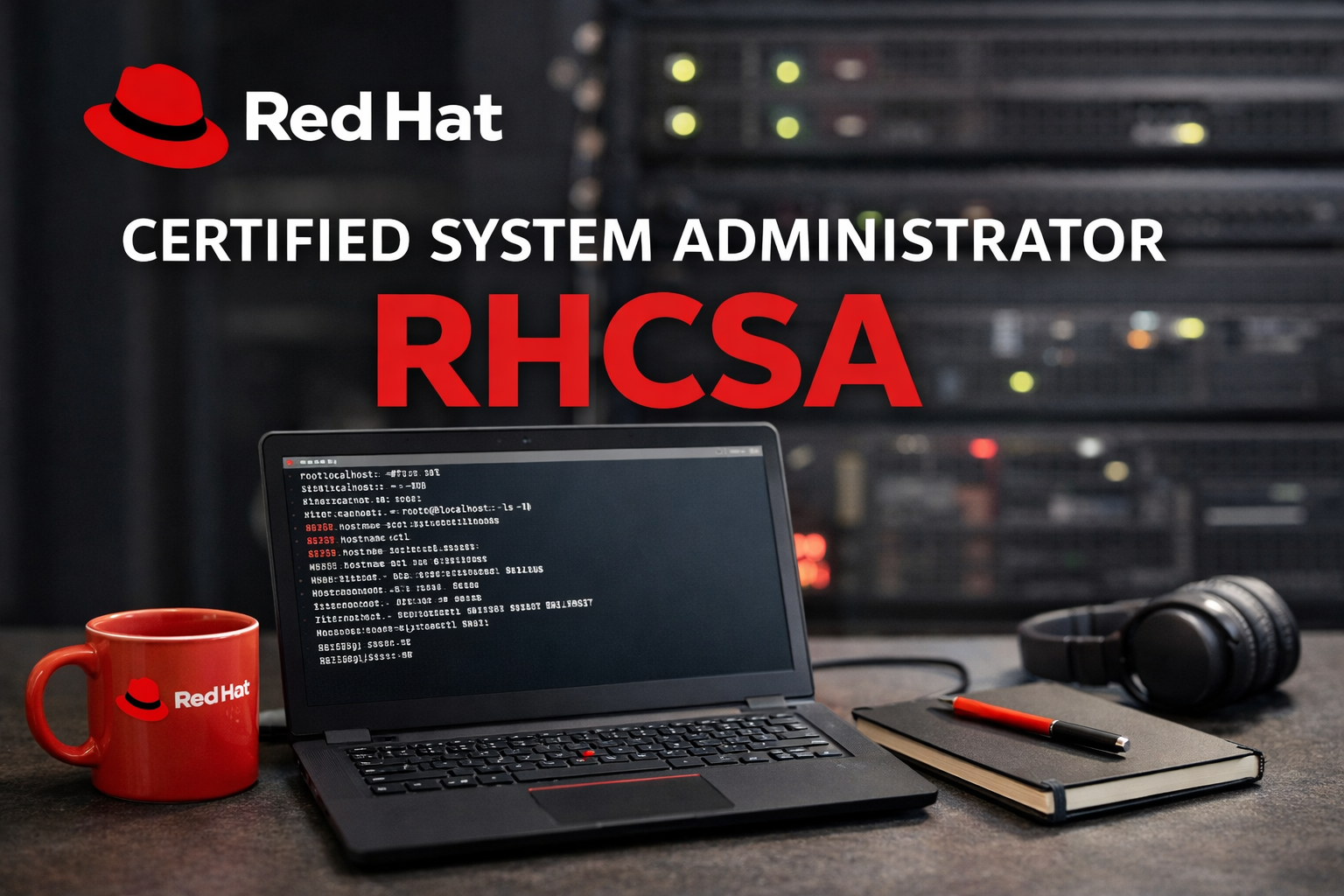
Red Hat Certified System Administrator (RHCSA)
Linux runs many important systems in the IT world. Banks, hospitals, telecom companies, and big IT firms use Linux servers to run their work. One of the most trusted Linux systems is Red Hat Enterprise Linux (RHEL).
The Red Hat Certified System Administrator (RHCSA) certification proves that you can manage RHEL systems in real work situations.
In 2026, companies are using more cloud, automation, and containers. All of these need Linux knowledge. That is why RHCSA is a good starting point for a career in system administration, cloud, or DevOps.
But is RHCSA really worth your time and money in 2026? Let us understand in simple words.
Demand of RHCSA Training
Many companies use Red Hat systems in their offices and data centers. Government offices and large companies also prefer RHEL because it is stable and secure.
In job websites across India, Middle East, Europe, and USA, you will often see jobs like:
- Linux System Administrator
- Technical Support Engineer (L2/L3)
- Cloud Support Engineer
- DevOps Engineer
- Infrastructure Engineer
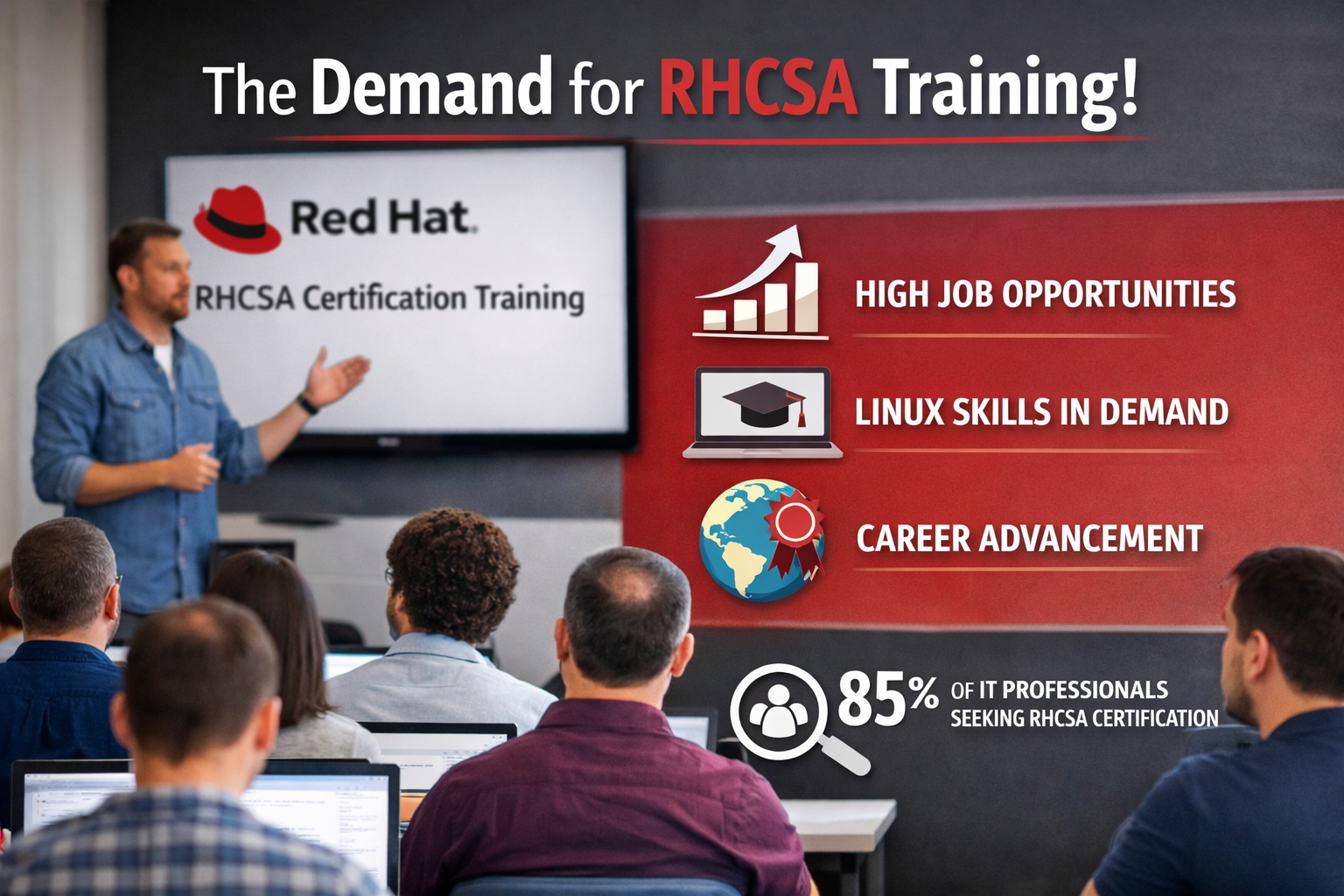
Most of these jobs ask for Linux skills. Many of them prefer RHCSA certification.
Salary Expectation in 2026 after RHCSA Certification
In India:
- Freshers with RHCSA: ₹3.5-6 LPA
- 3-5 years experience: ₹8-12 LPA
In the USA:
- Mid-level administrators earn between $75,000-$110,000 per year
One big reason companies like RHCSA is because the exam is practical. You must work on a real system during the exam. It is not a simple multiple-choice test. This makes companies trust certified people more.
Major Cloud Platforms in Industry
Linux and cloud go together. Most cloud servers run on Linux. If you know RHCSA, you can work easily on cloud platforms.
Amazon Web Services (AWS)
AWS is the biggest cloud platform in the world. Many virtual machines on AWS use Linux.
RHCSA skills like user management, storage setup, and service control are very useful in AWS.
Microsoft Azure
Azure also supports Linux servers, including RHEL.
Many companies use both on-premise servers and Azure cloud. RHCSA helps manage these Linux systems smoothly.
Google Cloud Platform (GCP)
GCP is popular for containers and Kubernetes.
Before learning Kubernetes, you must understand Linux basics. RHCSA gives that strong base.
Before Learning RHCSA

RHCSA is good for beginners, but you should know some basics:
- Basic computer knowledge
- Simple networking ideas
- Basic command line usage
If you are from a non-IT background, you can still learn. But you may need extra practice.
How Much Time Is Needed?
- Working professionals: 2 to 3 months with daily practice
- Students with Linux knowledge: maybe less
The exam is fully practical. Only reading theory will not help. You must practice in labs daily.
Also, think about your goal:
- Want to move into Cloud or DevOps? RHCSA is very helpful.
- Want to go into programming only? Linux knowledge helps, but certification may not be required.
Certifications After RHCSA
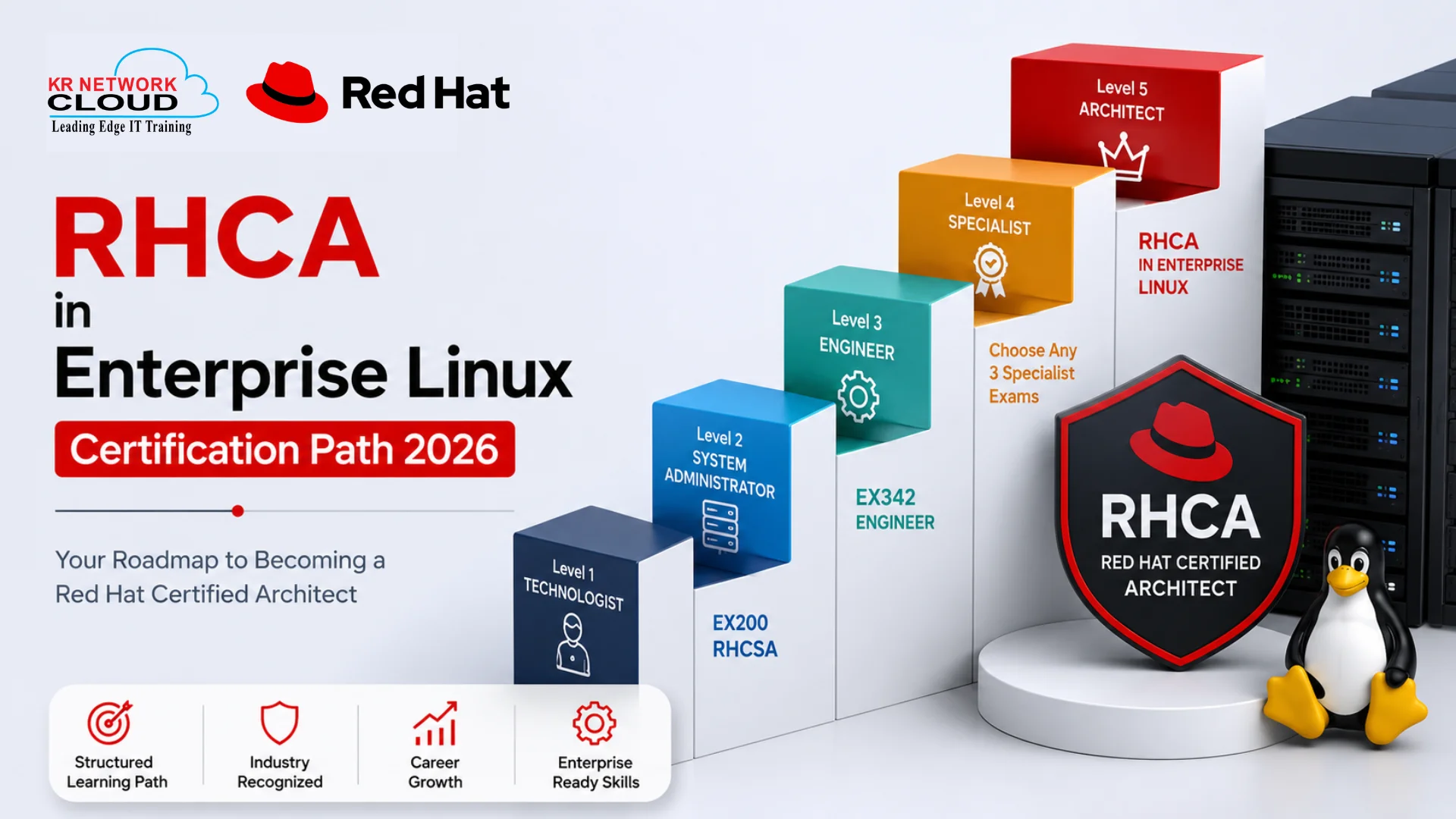
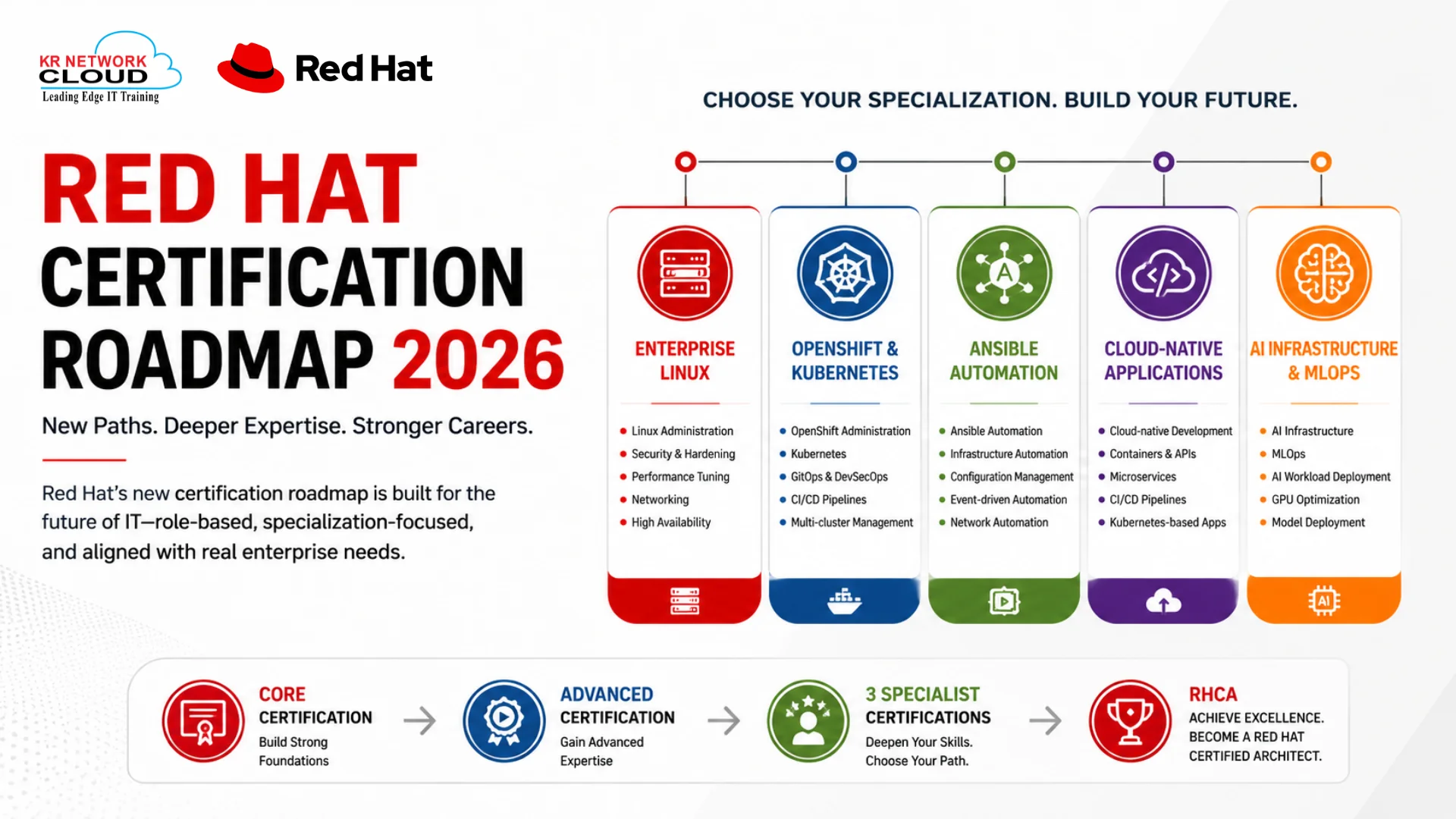
RHCSA is the first step in the Red Hat path.
After that, you can go for:
- Red Hat Certified Engineer (RHCE)
- Red Hat Specialist certifications
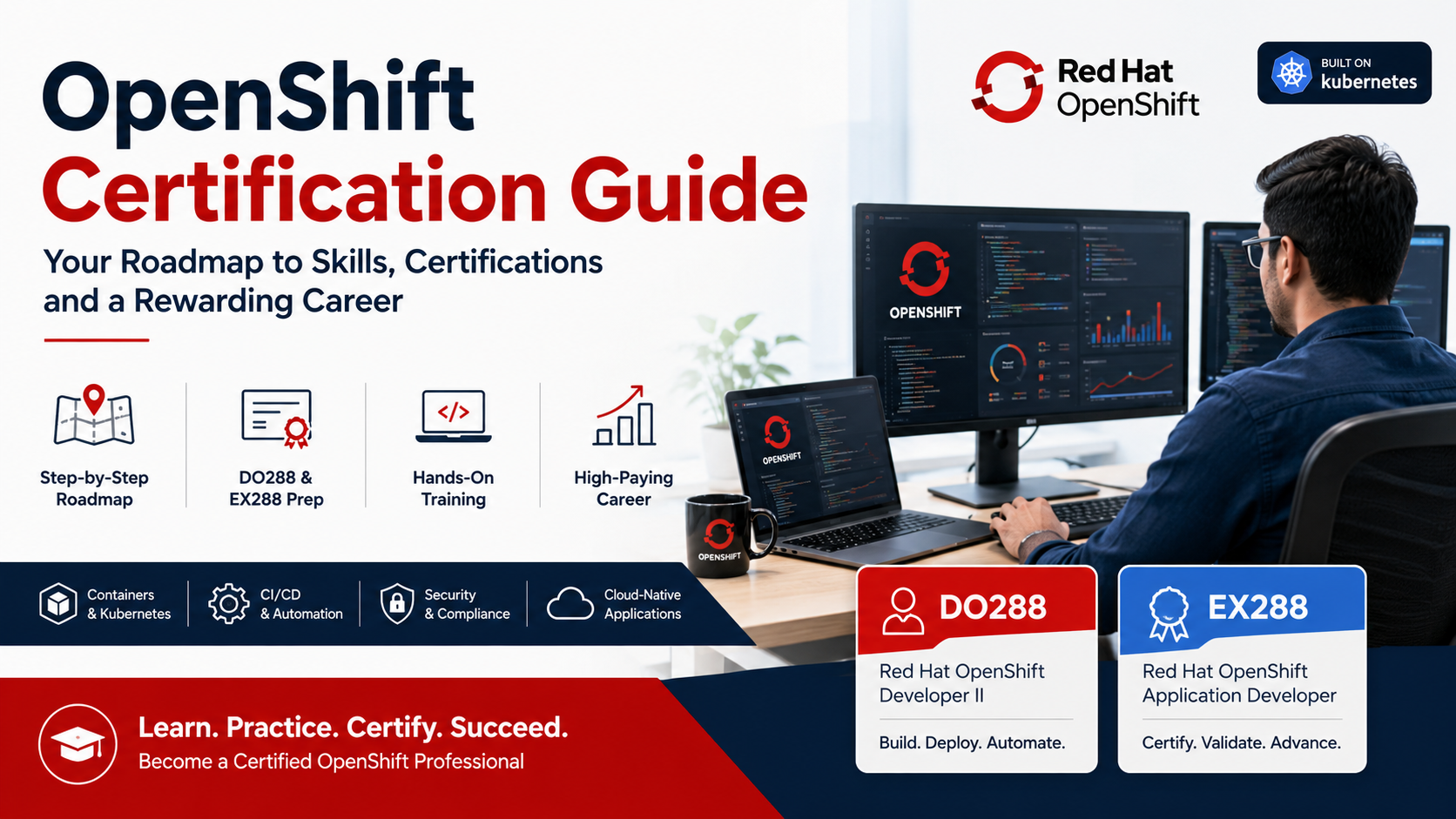
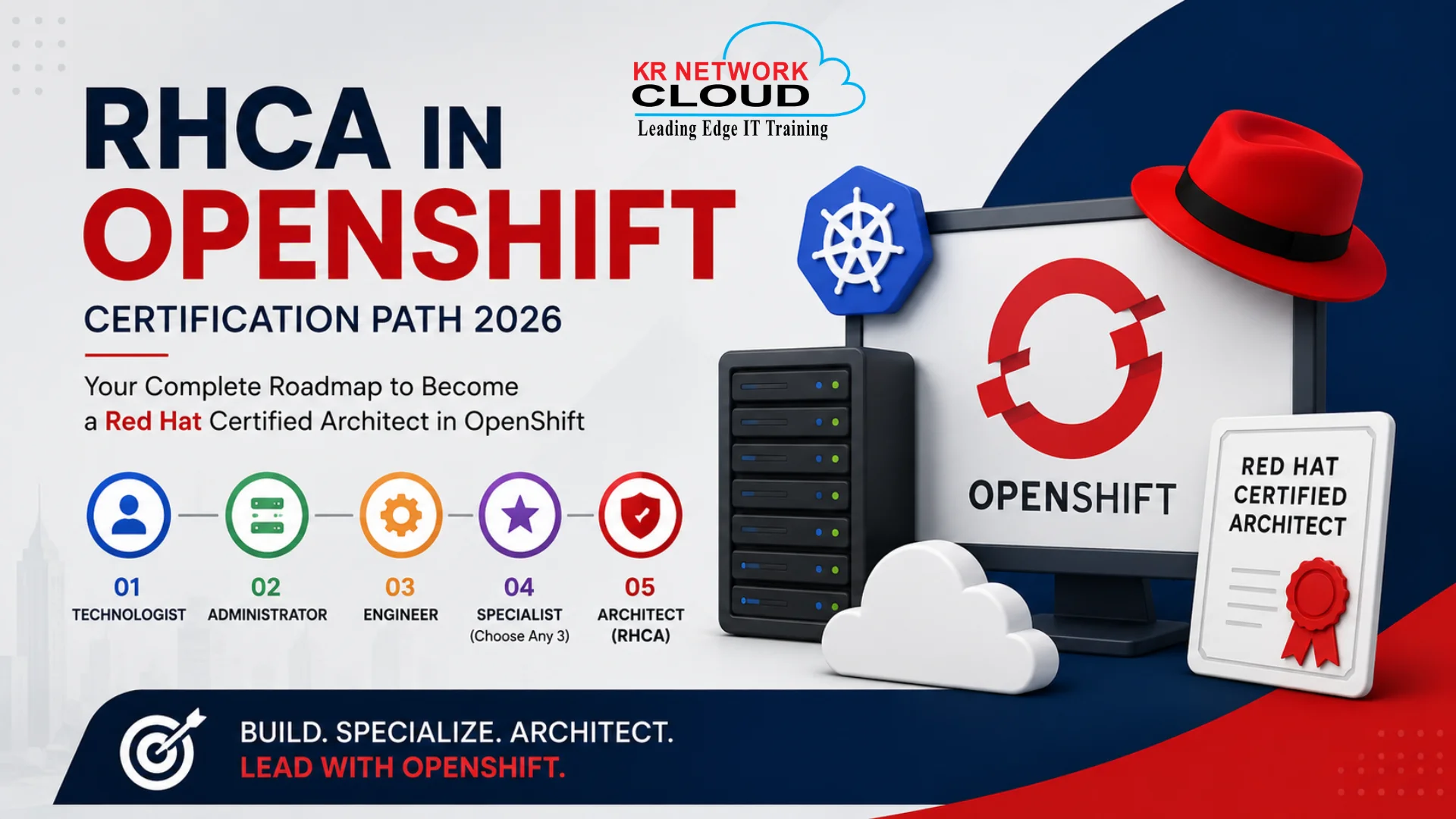
- OpenShift certifications
RHCE focuses more on automation using Ansible. This is very useful for DevOps jobs.
You can also combine RHCSA with cloud certifications like:
- AWS Solutions Architect
- Azure Administrator
This combination increases job chances.
Remember: Certification alone is not enough. Practice and real experience are also very important.
Importance of Online Learning and Labs
Linux cannot be learned by reading only. You must practice commands again and again.
Good online training should give:
- Live lab practice
- Real troubleshooting examples
- Storage and user management practice
- Service configuration
- Boot issue fixing
Cloud labs are helpful for working people who do not have physical servers at home.
The more you practice, the more confident you become.
Why Choose KR Network Cloud
KR Network Cloud focuses on practical training. Classes are not only theory-based. Students work on real lab systems.
Training includes:
- Live system configuration
- Real error fixing
- Storage and service management
- Mock interviews
- Career guidance
Flexible batch timings help working professionals. Recorded sessions help students revise topics again.
They also guide students who want to move from Linux support roles to cloud or DevOps roles.
FAQs
1. Is RHCSA hard for beginners?
It is not very hard, but it needs regular practice. Daily lab work makes it easier.
2. Does RHCSA expire?
Yes. Red Hat certifications are valid for about 3 years.
3. Can I get a job with only RHCSA?
Yes, especially for entry-level Linux or support roles. Internship experience helps more.
4. Is RHCSA useful in 2026 with automation growing?
Yes. Automation works on top of Linux systems. You must understand Linux first before automating it.
5. How long does preparation take?
Usually 2 to 4 months with regular practice.
Final Words
In 2026, Linux is still very important in IT. Cloud, DevOps, and automation all depend on it. RHCSA is a strong starting point for anyone who wants a career in system administration or cloud.
If you practice well and build real skills, RHCSA can open many job opportunities for you.
It is a practical certification, trusted by companies, and still very relevant in 2026.