Red Hat RHCA in Enterprise Linux Path Explained 2026
- KR NETWORK CLOUD
- May 19, 2026
Red Hat has completely redesigned its certification structure in 2026, and the new system is now much easier to understand compared to the older model.
Earlier, many Linux professionals used to get confused between RHCSA, RHCE, specialist exams, and RHCA requirements. The certification roadmap often felt unclear because people were collecting certifications without a focused specialization path.
Now Red Hat has reorganized everything into structured certification pathways and levels.
This guide focuses only on the RHCA in Enterprise Linux pathway and explains the complete Red Hat certification roadmap in simple words.
Red Hat’s New Certification Pathways
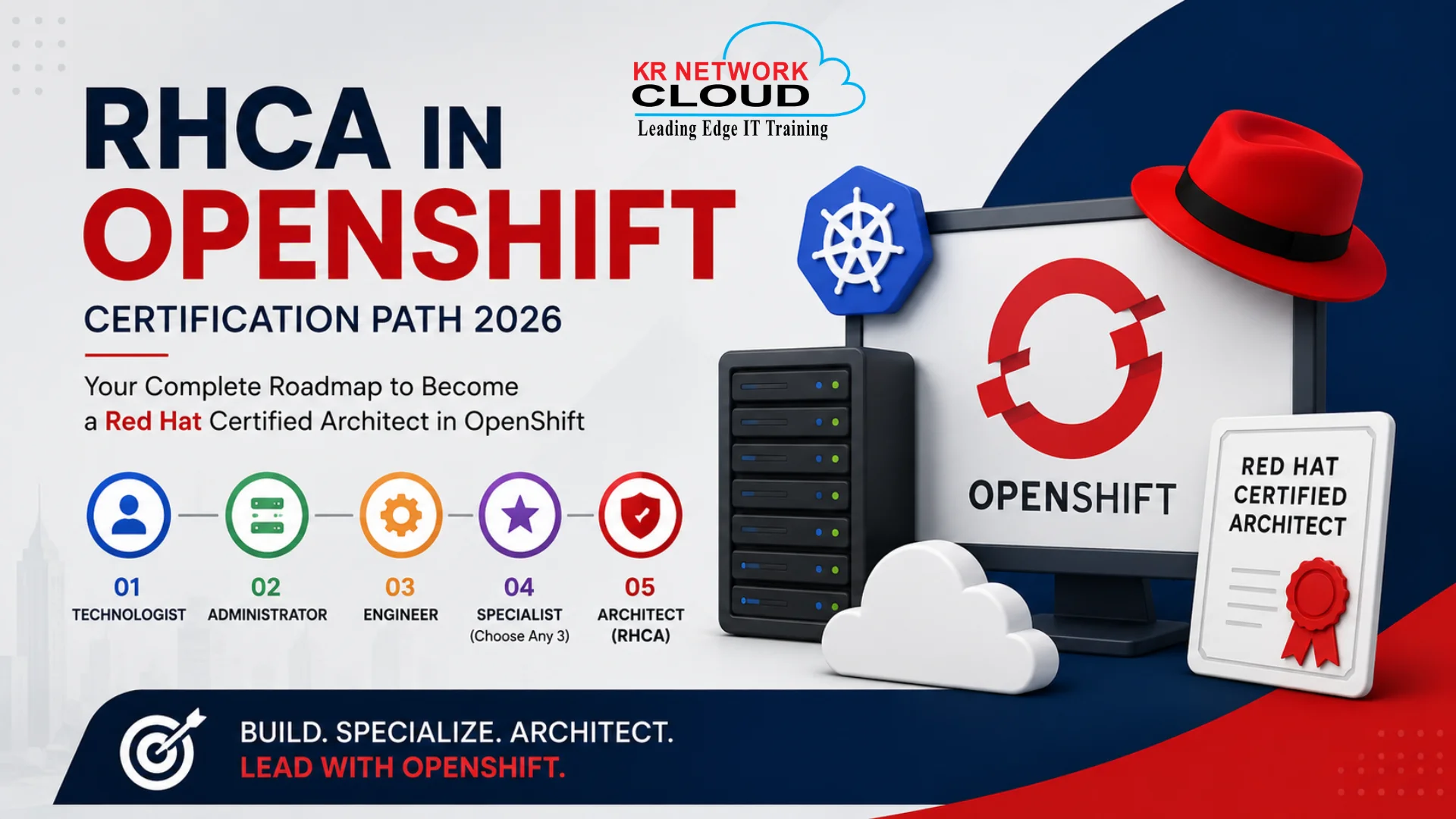
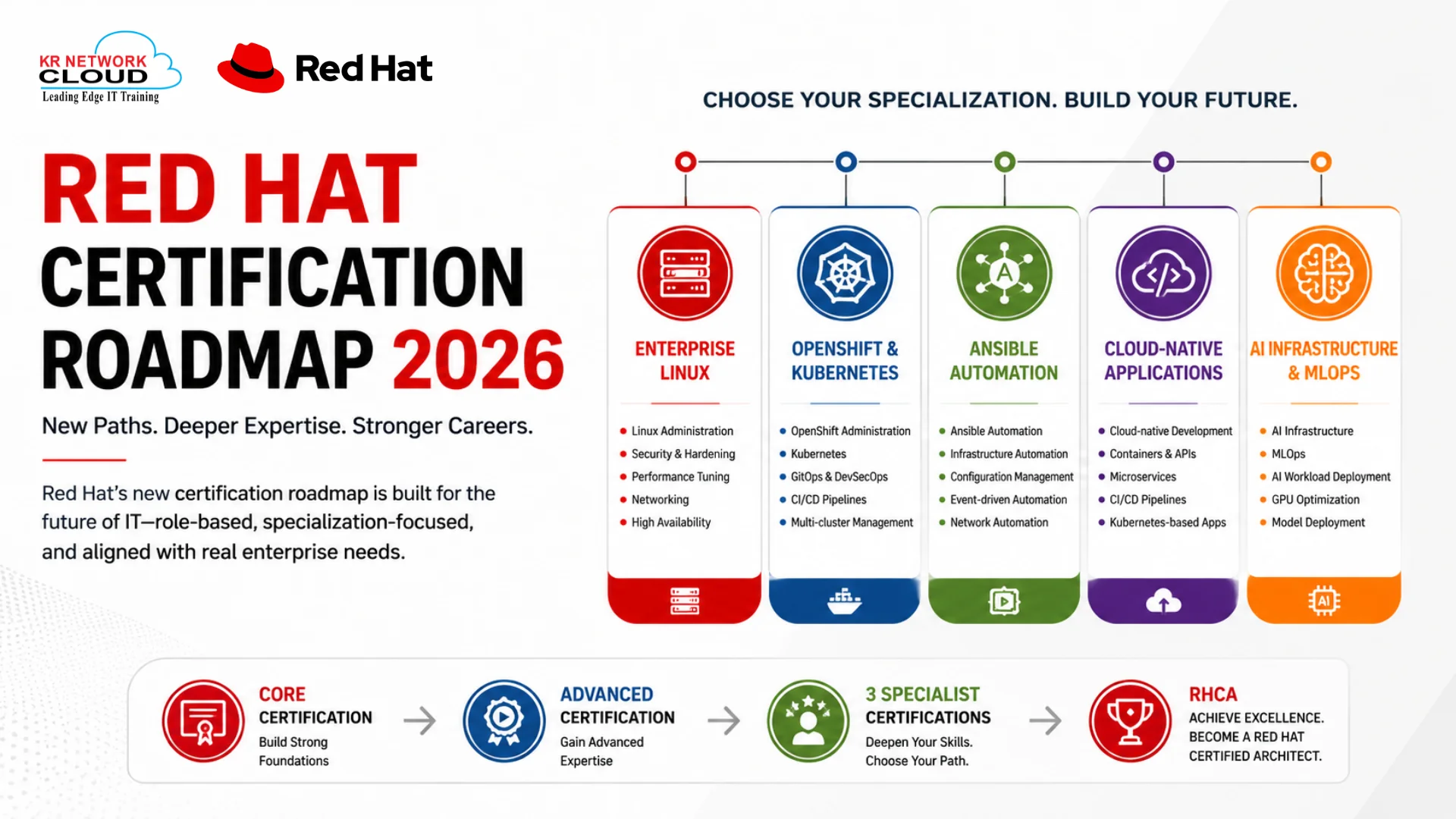
Red Hat certifications are now divided into 5 specialization tracks:
- Enterprise Linux
- OpenShift
- Ansible Automation
- Cloud-native Applications
- AI
This is one of the biggest changes in the new Red Hat certification path.
Earlier, many professionals simply aimed for “RHCA” without a clear specialization. Now certifications are more role-focused and technology-focused.
For example, professionals can now become:
- RHCA in Enterprise Linux
- RHCA in OpenShift
- RHCA in Ansible Automation
- RHCA in Cloud-native Applications
- RHCA in AI
This makes the certification roadmap much more practical because companies can identify skills faster and professionals can build expertise inside one technology domain.
Instead of collecting unrelated certifications, candidates now follow a more structured Red Hat learning path.
Red Hat’s New 5-Level Certification Structure
Another major update is the new level-based certification system.
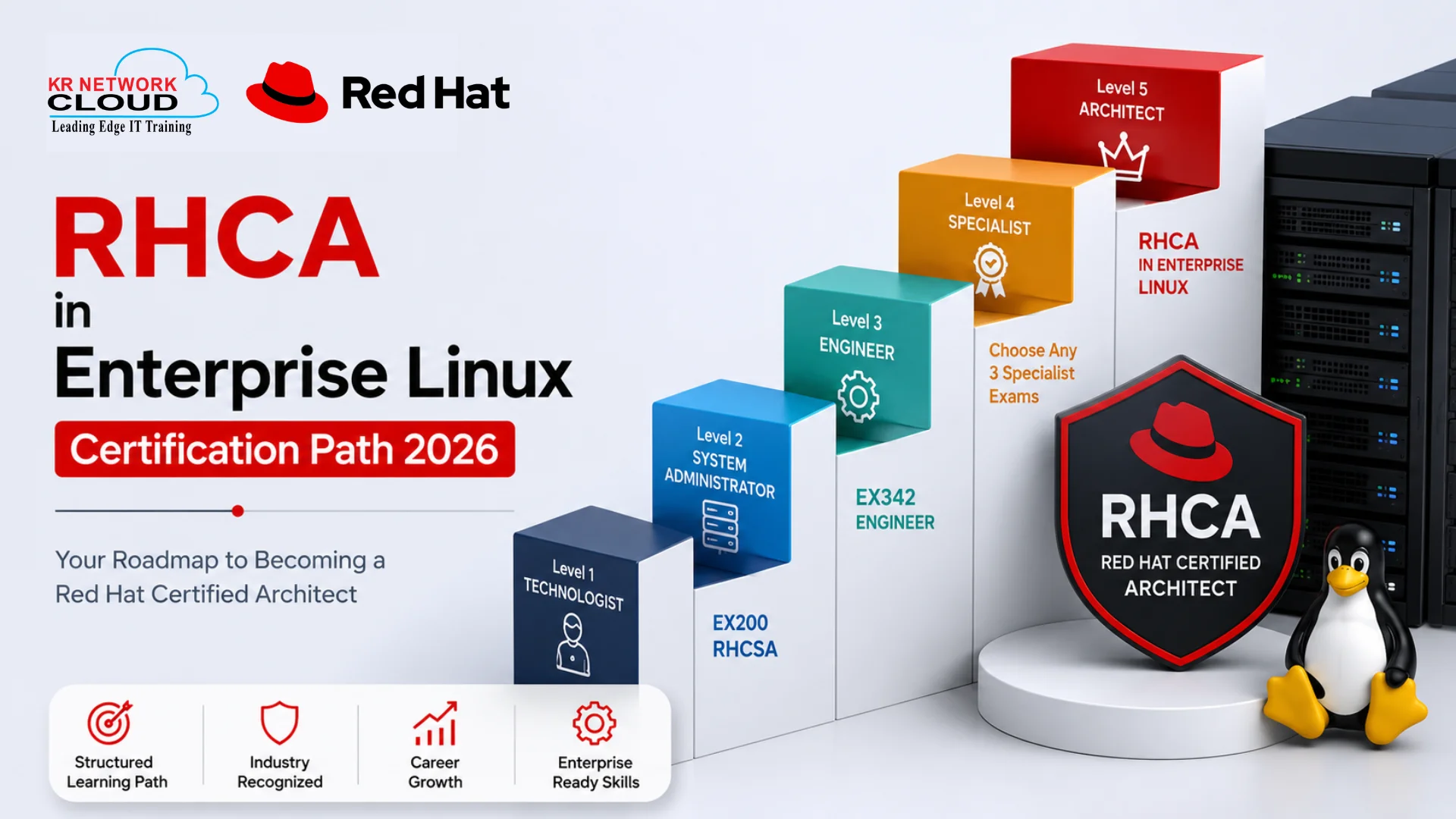
Red Hat has organized certifications into 5 structured levels.
Level 1: Technologist
This is the beginner stage.
At the moment, Red Hat has not introduced Enterprise Linux exams under this level.
Still, this level represents the entry point for future beginner-focused Red Hat certifications.
Level 2: System Administrator / Developer
This is where most Linux professionals usually begin their Red Hat certification journey.
At this level, you earn:
RHCSA (Red Hat Certified System Administrator)
To achieve RHCSA in Enterprise Linux, candidates need to pass:
- EX200
RHCSA is considered the foundation certification for Red Hat Enterprise Linux administration.
In this certification, candidates learn:
- Linux commands
- User and group management
- Storage management
- Service management
- Networking basics
- Linux security basics
- System administration tasks
For beginners entering Linux system administration, RHCSA is still one of the strongest starting points.
Many professionals searching for the best Linux certification for beginners usually start with RHCSA.
Level 3: Engineer
After RHCSA comes the Engineer level.
In the updated Enterprise Linux certification pathway, the Engineer-level certification currently requires:
- EX342
This level focuses more on advanced enterprise Linux administration and infrastructure management skills.
At this stage, professionals usually work with:
- Advanced Linux administration
- Enterprise server management
- Linux automation concepts
- Infrastructure troubleshooting
- Enterprise operations
This certification level is highly respected among Linux administrators, infrastructure engineers, platform engineers, and enterprise support professionals.
For professionals searching for advanced Linux certifications, this level becomes an important milestone.
Level 4: Specialist
This is where specialization becomes important.
At the Specialist level, candidates choose certifications based on the technologies and enterprise infrastructure areas they want to master.
Current Enterprise Linux specialist exams include:
- EX210: Cloud Infrastructure
- EX260: Ceph Cloud Storage
- EX358: Services Management and Automation
- EX362: Identity Management
- EX403: Deployment and Systems Management
- EX415: Security: Linux
- EX436: High Availability Clustering
- EX442: Performance Tuning
This part of the RHCA certification path gives professionals much more flexibility.
For example:
If you work in Linux security, you can choose security-focused certifications.
If your role involves infrastructure performance, clustering, storage, or enterprise operations, you can choose specialist certifications related to those areas.
This new structure feels much more career-oriented compared to the older Red Hat certification model.
Level 5: Architect (RHCA)

This is the highest certification level in the Enterprise Linux pathway.
At this stage, candidates become:
Red Hat Certified Architect in Enterprise Linux
To earn RHCA in Enterprise Linux, candidates currently need:
- EX200
- EX342
- Minimum 3 specialist certifications
This is one of the biggest improvements in the new Red Hat certification roadmap.
Earlier, many professionals viewed RHCA as simply collecting multiple certifications.
Now the process feels much more organized because certifications are grouped inside one specialization pathway.
The roadmap is clearer, easier to understand, and more aligned with real-world enterprise Linux careers.
Old Red Hat Path vs New Red Hat Path
The older Red Hat certification journey usually looked like this:
RHCSA → RHCE → 5 Multiple unrelated certifications → RHCA
The newer certification model is now more structured:
Core Certification → Engineer Level → Alteast 3 Specialist Certifications → RHCA in One Specialization
This makes long-term career planning easier for Linux professionals.
Why the New RHCA Structure Makes More Sense
One thing that stands out in the 2026 Red Hat certification update is how practical the roadmap now feels.
Instead of earning random certifications, professionals can focus deeply on one technology specialization.
For enterprise companies, this is also useful because it becomes easier to identify professionals with focused expertise.
For example:
- Enterprise Linux specialists
- OpenShift specialists
- Automation specialists
- AI infrastructure specialists
The updated system feels much more aligned with modern enterprise IT job roles.
Why RHCA Is Still Highly Respected
Red Hat certifications have always been respected because the exams are practical and hands-on.
Unlike many certification providers, Red Hat exams require candidates to work directly on Linux systems during the exam.
Candidates perform real administration tasks instead of answering only multiple-choice questions.
That practical approach is one of the biggest reasons why RHCA remains one of the most respected enterprise Linux certifications in the IT industry.
Is RHCA in Enterprise Linux Good for Beginners?
Yes, but beginners should approach RHCA as a long-term goal.
The best approach usually looks like this:
- Step 1 – Learn Linux fundamentals
- Step 2 – Prepare for RHCSA (EX200)
- Step 3 – Gain hands-on Linux administration experience
- Step 4 – Prepare for the Engineer-level certification (EX342)
- Step 5 – Choose 3 specialist certifications based on career goals
- Step 6 – Earn RHCA in Enterprise Linux
This step-by-step learning approach makes the journey much easier and more realistic.
Read the complete Red Hat Certified Architect Updates here
Useful Skills for RHCA in Enterprise Linux
If your long-term goal is RHCA in Enterprise Linux, these skills are extremely useful:
- Linux administration
- Networking fundamentals
- Shell scripting
- Enterprise troubleshooting
- Linux automation basics
- Security fundamentals
- Infrastructure management
- Performance tuning
- High availability concepts
You do not need to master everything immediately.
The best approach is consistent practice and hands-on learning.
Career Opportunities After RHCA
RHCA in Enterprise Linux can help professionals target roles like:
- Linux Administrator
- Senior Linux Engineer
- Infrastructure Engineer
- Platform Engineer
- Enterprise Support Engineer
- DevOps Engineer
- Linux Architect
- Systems Architect
Many enterprise companies value Red Hat certifications because they demonstrate practical Linux administration skills.
Is RHCA in Enterprise Linux Worth It?
For Linux professionals working in enterprise environments, yes.
RHCA is difficult, but it carries strong value in enterprise infrastructure, Linux administration, platform engineering, and enterprise operations roles.
The newer Red Hat certification structure also makes the roadmap easier to understand compared to older certification models.
Instead of chasing unrelated certifications, professionals can now build deep expertise inside one specialization pathway.
Final Thoughts
The updated Red Hat certification structure feels much more organized compared to the older system.
Instead of creating confusion around RHCSA, RHCE, specialist exams, and RHCA requirements, Red Hat now provides a much clearer progression model.
The new pathway-based structure also feels more aligned with real-world enterprise IT careers.
For Linux professionals, the RHCA in Enterprise Linux pathway now offers a structured roadmap from beginner-level Linux administration skills to enterprise architect-level expertise.
If you are serious about Linux administration, enterprise infrastructure, platform engineering, or enterprise operations, RHCA in Enterprise Linux can become a strong long-term certification goal.
The important thing is not to rush.
Start with Linux basics, practice consistently, build hands-on experience, and move step by step through the Red Hat certification levels.
FAQs
What is RHCA in Enterprise Linux?
RHCA in Enterprise Linux is the highest certification level in the Red Hat Enterprise Linux certification pathway. It focuses on advanced Linux administration, enterprise infrastructure, automation, security, and system management skills.
Is RHCA a single exam?
No.
RHCA is not a single exam. Candidates must complete multiple certification levels and specialist exams to achieve the RHCA credential.
What are the new Red Hat certification pathways?
Red Hat now offers certifications in 5 specialization areas:
- Enterprise Linux
- OpenShift
- Ansible Automation
- Cloud-native Applications
- AI
What is the Engineer-level exam in the Enterprise Linux pathway?
In the updated Enterprise Linux certification pathway, the Engineer-level certification currently requires:
- EX342
How many specialist exams are required for RHCA in Enterprise Linux?
Candidates currently need:
- EX200
- EX342
- Minimum 3 specialist certifications
to achieve RHCA in Enterprise Linux.
Is RHCA good for DevOps careers?
Yes, RHCA aligns well with DevOps and enterprise infrastructure roles because the certification path includes automation, system management, clustering, security, and enterprise administration concepts.
Which certification should beginners start with?
Most beginners should start with:
- Linux fundamentals
- RHCSA (EX200)
RHCSA remains the foundation certification in the Enterprise Linux pathway.
Are Red Hat exams practical?
Yes, Red Hat certifications are known for hands-on practical exams where candidates work directly on Linux systems instead of answering only multiple-choice questions.
Is RHCA difficult?
Yes, RHCA is considered one of the toughest Linux certifications because it requires advanced practical knowledge across enterprise Linux administration and specialist technologies