Must-Learn DevOps Tools For Enterprise In 2026
- KR NETWORK CLOUD
- May 4, 2026
Introduction
I have worked as a DevOps Engineer for many years, and I have seen how software delivery has changed. Today, companies need to build and release software quickly. If they do not improve their process, they fall behind.
This is why many people are now choosing DevOps online training to upgrade their skills. DevOps is not just a trend. It is a working style where development and operations teams work together to deliver software faster and better.
If you are starting your journey, this guide is useful for DevOps for beginners. It explains the main tools used in real projects and helps you understand how a DevOps engineer works.
DevOps is not a single tool. It is a group of tools that work together. These tools handle coding, building, testing, deployment, and monitoring.
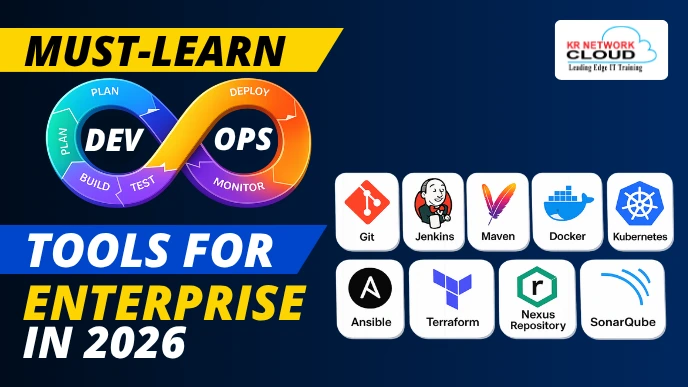
In this blog, I will explain 9 essential DevOps tools:
Git, Jenkins, Maven, Docker, Kubernetes, Ansible, Terraform, Nexus Repository, and SonarQube.
DevOps Lifecycle in Simple Words
The DevOps process follows a simple flow:
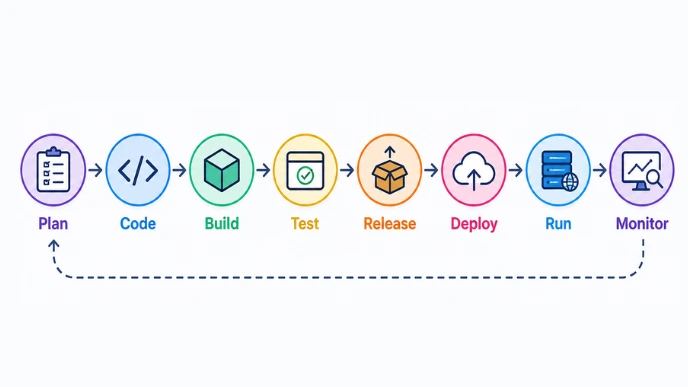
Each tool fits into one or more steps:
- Code → Git
- Build → Maven
- Build and Release → Jenkins
- Test → SonarQube
- Store → Nexus
- Containers → Docker
- Deploy → Kubernetes
- Configuration → Ansible
- Infrastructure → Terraform
If you take proper DevOps training, you will learn how these tools connect in real projects.
Essential DevOps Tools Explained
Git – Code Management
Git is used to track code changes. It helps developers save different versions of their work.
A DevOps engineer uses Git daily. It allows multiple people to work on the same project without conflict. Developers can create branches, make changes, and merge them safely.
Git also acts as a backup. Every developer has a copy of the project, so data is safe.
Jenkins – Automation Tool
Jenkins is used to automate tasks like building, testing, and deploying code.
When code is pushed to Git, Jenkins starts a process automatically. It builds the code, runs tests, and deploys it if everything works fine.
This reduces manual work and saves time. That is why Jenkins is a key topic in most DevOps certifications.
Maven – Build Tool
Maven is mainly used for Java projects. It helps manage dependencies and build applications.
Instead of downloading libraries manually, Maven does it automatically. It also compiles code, runs tests, and creates build files.
For anyone doing DevOps for beginners, Maven is one of the first build tools to learn.
Docker – Container Tool
Docker packages an application with everything it needs to run.
This means the app works the same everywhere. It removes the problem where something works on one machine but fails on another.
Docker uses containers, which are fast and lightweight. It is widely used in modern DevOps training programs.
Kubernetes – Container Management
Kubernetes manages multiple containers.
It ensures applications are always running. If something fails, it restarts automatically. It also handles traffic and scales applications when needed.
For advanced roles, Kubernetes is important for a devops engineer certification.
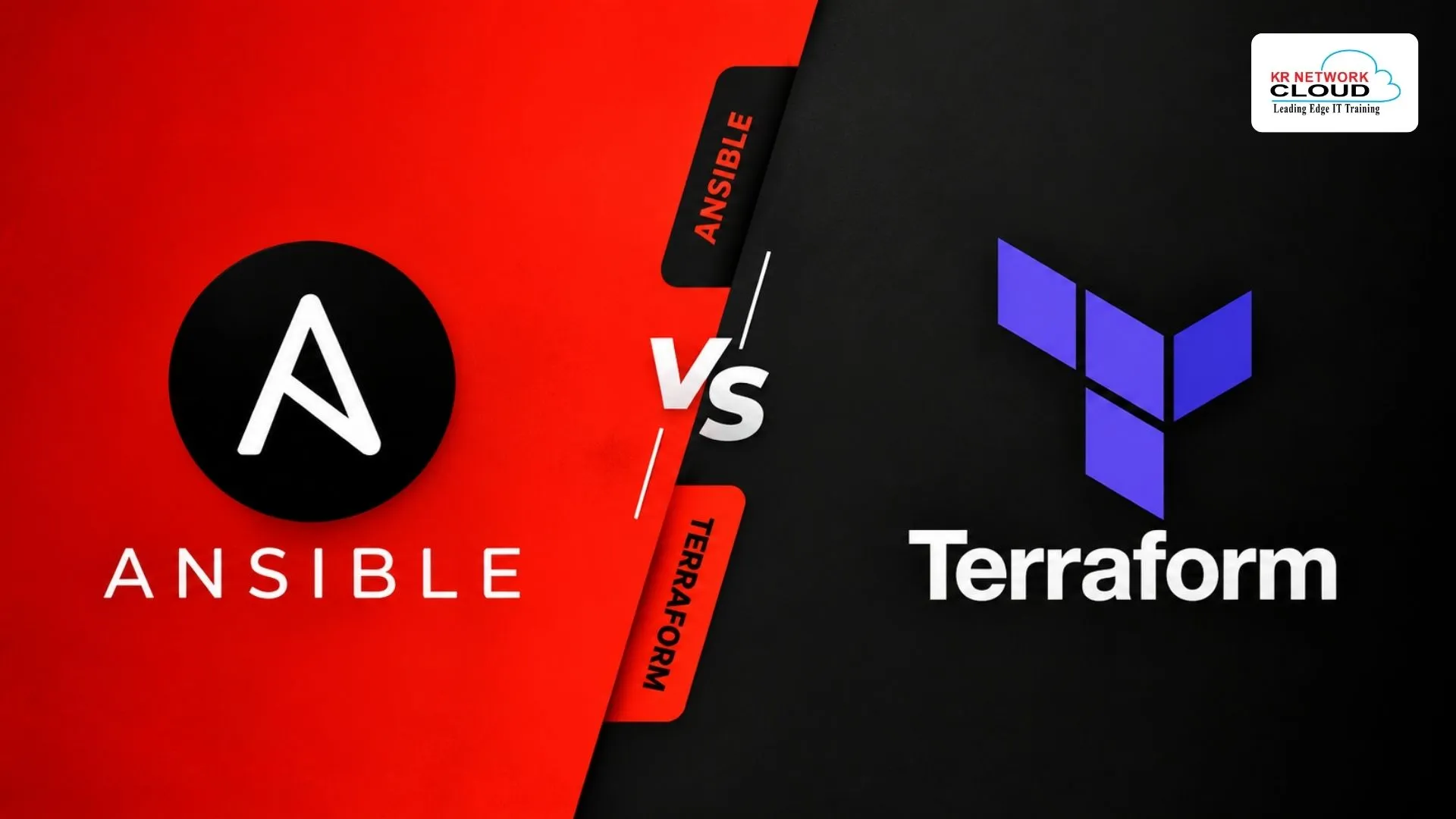
Ansible – Configuration Tool
Ansible is used to set up and manage servers.
It uses simple YAML files called playbooks. These define tasks like installing software or creating users.
Ansible does not need any agent. It works over SSH, making it simple and fast.
Many companies expect a DevOps engineer to know Ansible for automation.
Terraform – Infrastructure Tool
Terraform is used to create infrastructure using code.
Instead of setting up servers manually, you write code to define them. Terraform then creates and manages everything.
It also tracks changes and shows what will be updated before applying them.
Terraform is a must-have skill in modern DevOps certifications.
Nexus Repository – Storage for Builds
Nexus stores build files in one place.
It helps manage versions and control access. Teams can store and retrieve artifacts easily.
Without Nexus, files can become hard to track and manage.
SonarQube – Code Quality Tool
SonarQube checks code quality and security.
It finds bugs, security issues, and bad coding practices. It also ensures code meets quality standards before deployment.
This tool is important for maintaining clean and safe code in real projects.
How These Tools Work Together
Here is how a real DevOps pipeline works:
- Developer writes code and pushes to Git
- Jenkins detects the change
- Maven builds the code
- SonarQube checks quality
- Nexus stores the build
- Docker creates a container
- Kubernetes deploys the app
- Ansible sets up servers
- Terraform manages infrastructure
This workflow is taught in most DevOps online training programs because it reflects real industry use.
Skills Needed Before Learning DevOps
Before starting your journey, you should know:
- Basic Linux
- Networking basics
- One cloud platform like AWS or Azure
A good learning path for DevOps for beginners is:
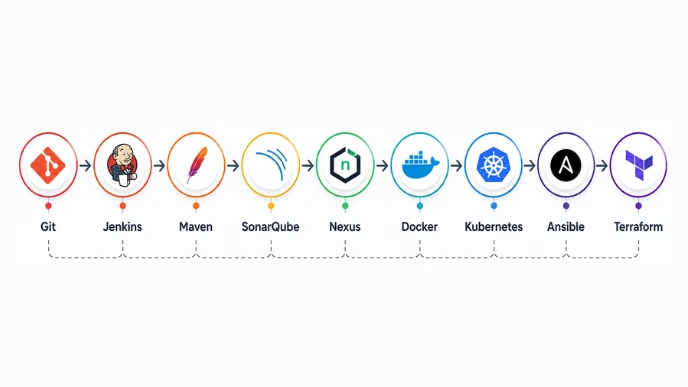
Git → Jenkins → Maven → SonarQube → Nexus → Docker → Kubernetes → Ansible → Terraform
Following this order helps you understand step by step.
Talk to our technical counselling team before starting learning DevOps Tools,
Why Learn DevOps Today
There is a high demand for skilled DevOps professionals. Companies want faster delivery and better quality.
By completing DevOps training, you can:
- Get better job opportunities
- Work on real-world projects
- Build strong technical skills
Many professionals also go for DevOps certifications to validate their knowledge and grow their career.
If you want to become a successful DevOps engineer, learning these tools is the first step.
Final Thoughts
These 9 tools form a complete DevOps setup.
Each tool has its own role, but real value comes when they work together.
From my experience:
- Work becomes faster
- Errors are reduced
- Deployments become smooth
Start with basic tools, practice daily, and grow step by step.
If you are serious about your career, consider joining DevOps online training and working toward a devops engineer certification.
That is how you build strong and practical DevOps skills.